101+ Hours. 2 Hours of Sleep. 200 + Miles of Mind Games
Endurance, Altitude, and Sleep Deprivation
Every race possesses its own distinct DNA. Some punish you with searing, desert heat, while others try to break your spirit with sheer verticality. The Tahoe 200 Mile Endurance Run chooses a different weapon: a relentless, oxygen-deprived average elevation of 7,500 feet, wrapped in a non-stop carousel of punishing climbs and bone-jarring descents. On Tuesday, June 16, 2026, around the late afternoon hours, Govinda and I finally crossed that elusive finish line. Out of about 277 runners, only 183 were able to cross the finish line, i.e., is about 66% completion rate.
We arrived at the starting line carrying a massive ambition, the Grand Slam of Ultra Endurance, an audacious quest to conquer four distinct 200+ mile races within a single six-month window. We already had one savage beast tamed; Arizona Monster 300 was behind us. Tahoe would be the second. Moving through the breathtaking landscapes of the Sierra Nevada forest, framed by snow-capped peaks and the pristine, shimmering blue expanse of Lake Tahoe, the sheer physical toll initially threatened to overwhelm me. But with time, the mountain’s bite wore off. The human mind and body are profoundly fascinating instruments, capable of enduring unimaginable physical and psychological suffering, provided you train for it, dream for it, and have an unbreakable foundation supporting you.
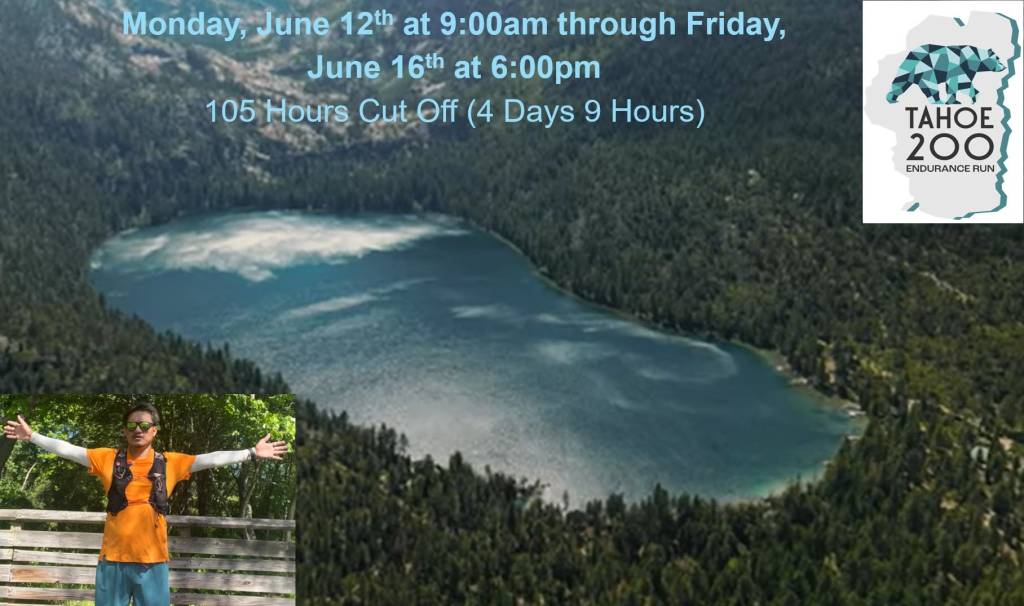

But Tahoe brought a cold, stark reality. Unlike the Arizona Monster 300, we had no crew waiting for us at every intersection. No familiar faces to change our socks, no private sanctuary to collapse into. We were entirely uncrewed, meaning every tactical decision, piece of gear, and calorie choice had to be mathematically flawless. The margin for error wasn’t just small; it was non-existent. Armed with the hard-learned lessons of Arizona Monster 300 regarding apparel and nutrition, we prepared to step into the wilderness. We knew the psychological trap of these distances. When you run for days without sleep, your plans and execution strategies are perfectly clear in your head, but your brain flatly refuses to execute them. In the deep trenches of an ultra, you need a sane pacer or crew to issue direct commands, to order you to eat, and to force you to stick to the script. Without them, we would have to be our own keepers. Success out here doesn’t just come down to grit, it comes down to the strategy at the aid stations and trails. For me, survival and strength meant striking a strict balance between precision sports science and the comforting, savory crunch of home: religiously downing high-sodium PH1500 to lock in hydration at every aid stations, while keeping the palate alive and the engine running on handfuls of Baji Daalmoth in trails.
This race isn’t just a a stat, it is a complete reimagining of what a human being can endure when pushed to the absolute edge. To look at the numbers is to realize that we didn’t just complete a race, we survived a self-sustained mountain expedition. We incinerated a two-week mountain of calories, pumped nearly seven gallons of sweat through our bodies just to keep the engine from redlining, and hauled a punishing 20+ pound backpack up and down the equivalent of Mount Everest one and a half times. To experience all of this over 101 relentless hours on a mere two hours of sleep, stripped entirely of a support crew or outside pacers, removes the effort from the realm of traditional sports. It became a masterclass in self-reliance and a profound demonstration of brotherhood on the trail, proving that when the physical tank is completely empty, an unspoken partnership and an unyielding will are all you need to carry the weight and conquer the distance.

Yet, before we even faced the mountains, humanity found us. Three incredible families from the Bay Area opened their hearts with overwhelming love and compassion. To Sangha and Rabita Maharjan and their family, Shalom bhai and Merisa, and Tej ji from the Shangrila Himalayan Kitchen Restaurant, you became our sanctuary. You made us feel entirely at home, nourishing our bodies and souls with our staple Daal Bhat, rice, and sumptuous Nepali food. Physically fortified and mentally grounded by this kindness, we were ready.
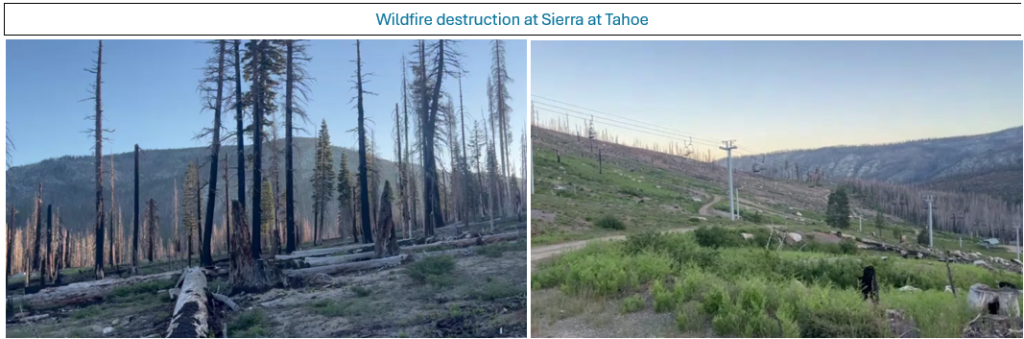
As we had done for previous races, Govinda and I flew into Sacramento two days early to handle the intense logistics of dropping off our drop bags at various remote aid stations. Initially, the race was slated as an out-and-back course. But just two to three weeks before the start, the organizing team pulled off a administrative miracle, securing the necessary permits to revert the course to a glorious, brutal full loop around Lake Tahoe. It meant reopening a massive 40-to-50-mile segment that had been strictly closed to the public for nearly seven years due to devastating wildfires. As we would soon see, the trail bore the ghostly, charred scars of that environmental destruction, a solemn reminder of nature’s volatile power. This last-minute structural shift threw a massive wrench into our meticulously crafted pacing plans, but we accepted it the only way we knew how: as another challenge to be conquered.
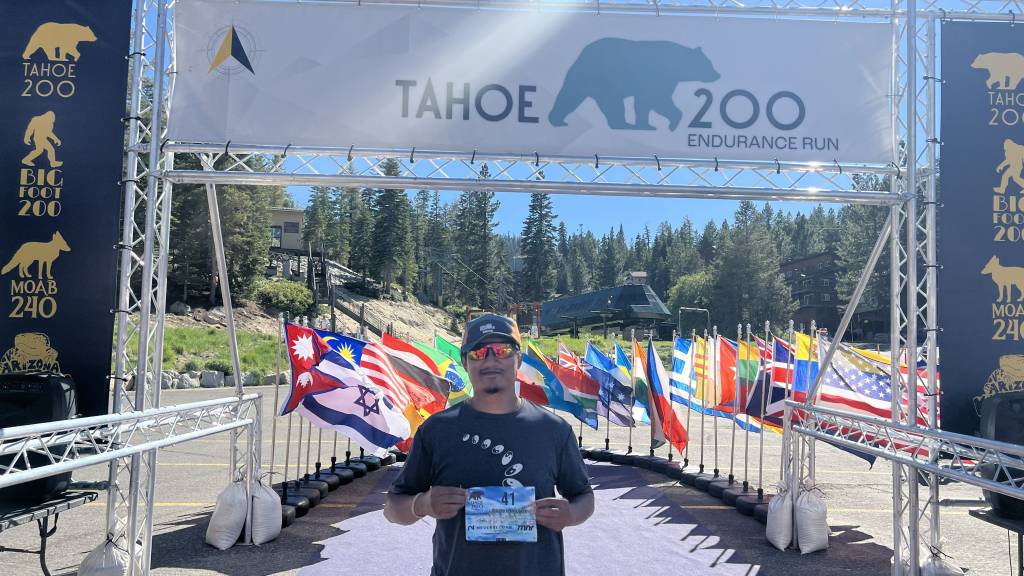
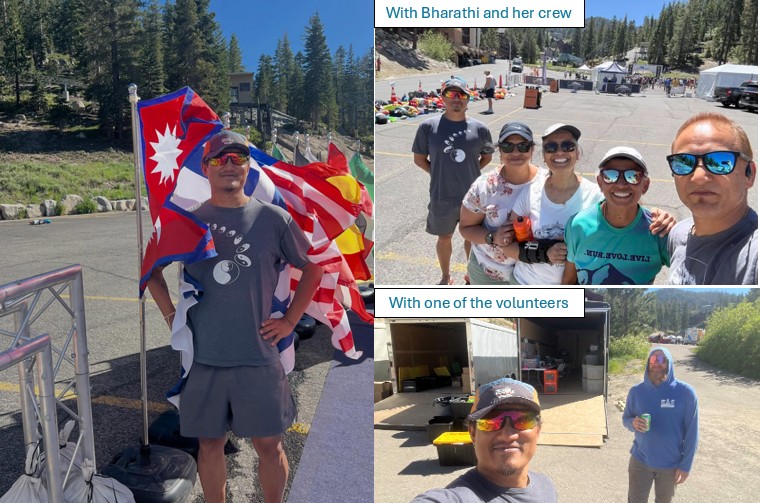
Day 1 (Friday June 12, 2026): The High-Altitude Illusion
Heavenly, Armstrong Pass to Housewife Hill
The alarm split the morning silence at 5:30 AM on Friday, June 12, 2026. For me, it had been a long, torturous night; the cruel cocktail of pre-race anxiety and Govinda’s natural nighttime acoustics had kept me wide awake. Just when I thought I was finally drifting off into a deep sleep, the unwanted jolt of the alarm shocked me back to reality. We dragged ourselves out of bed, grabbed our mandatory gears, and double-checked our packs one final time. To settle our stomachs and punch in a massive dose of high-carb fuel, we headed to an IHOP, where I forced down four pancakes and washed them down with two cups of coffee. Driving up the winding mountain road afterward, the looming peaks served as a silent, stark reminder of the massive trails waiting to swallow us up.
Our launching pad was a massive parking lot nestled between jagged peaks, alpine hotels, and ski resorts, a perfect base camp for the gathering herd of ultra-runners. The morning air buzzed with nervous energy. Moving through the crowd, we swapped greetings with familiar faces, including Amelia and Justine, who were also daring to chase the Grand Slam circuit. We picked up our live satellite tracking transmitters, snapped a few photos, and drew early strength from the camaraderie. At 9:00 AM, Race Director Candice Burt delivered the legendary ultra-runner’s oath: “If I get lost, hurt, or die, it’s my own damn fault.” With that, the race erupted.
The elite runners tore out of the gate, vanishing up the singletrack climbs, while Govinda and I settled into a disciplined, calculated power-walk. In the opening hours of a 200-miler, when adrenaline runs hot and energy feels limitless, it is incredibly easy to run too fast and doom your race before it even begins.
We refused to take the bait. For 90 minutes, we moved through groves of towering, ancient pines until we hit the first turnaround point, where I took a quick gulp of water before reversing our steps. Almost immediately, the terrain revealed its first hidden hazard: thick, heavy clouds of yellow pine pollen and fine dust choked the air. Some runners, fiercely conscious of the threat, pulled masks over their faces. We would later hear harrowing stories of competitors forced to drop out early on due to severe, dust-induced breathing complications in previous races. We pushed through the haze, arriving back at the Heavenly Aid Station to heavily refuel and reload our packs with calories. We were going to need every single one of them; a grueling, 16-mile mountain segment to Armstrong Pass lay ahead.
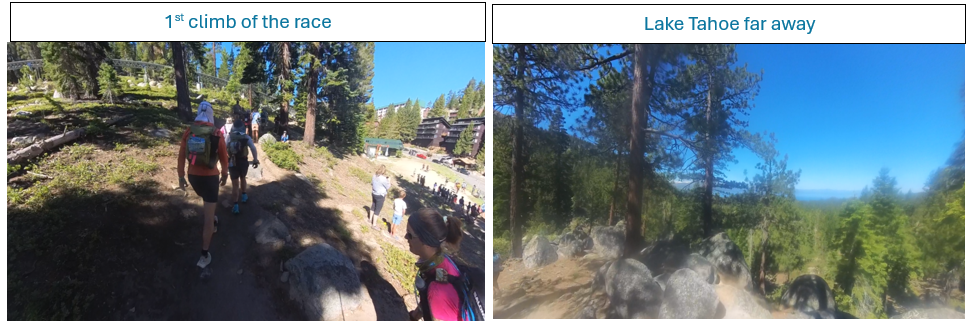
The first 7 to 8 miles offered decent trail conditions, but they tilted relentlessly upward. I had always been a confident, aggressive climber, but as the thin air seeped into my lungs, the mountain began to push back. By the time we crested 9,000 feet, my heartbeat was hammering violently in my ears. Then, a bizarre, unprecedented physical sensation hit me: a deep, throbbing pressure bloomed beneath my left temple, right below my ear. I felt thoroughly intoxicated, experiencing a surreal high without having consumed a single drop of alcohol. To make matters worse, the trail deteriorated into a narrow tightrope packed with slick snow and ice. One misplaced step, one minor slip, and you would plummet 500 feet into the gorge below. I slowed my pace to a crawl, deliberately planting my trekking poles and verifying the structural integrity of the snow before committing my weight to each step. We navigated this treacherous mile with absolute focus, but as we crested the highest point of the segment at 9,800 feet, the severe throbbing in my temples intensified. That final 100-foot vertical scramble was so profoundly energy-sapping that I genuinely believed I was going to pass out right there on the ridge. Suddenly, my phone rang. It was Anju. Her voice shattered the high-altitude fog, shocking my system awake and instantly pulling me back from the brink, a perfectly timed intervention that became the running joke of the day among the surrounding runners.
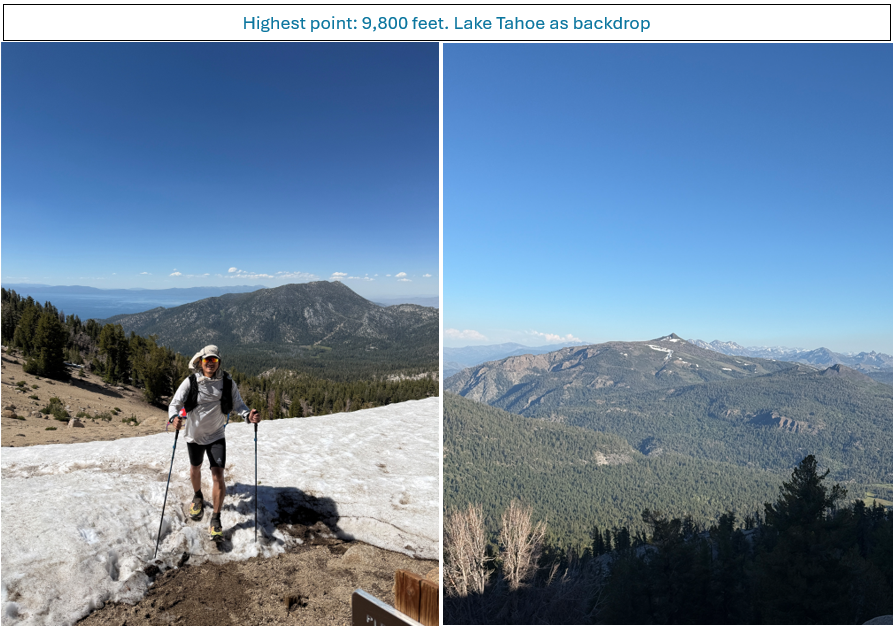
Near the summit, I ran into Morgan from Norwalk, CT, a running brother from the 2022 Moab 240. I smiled, remembering how I had shared my own supply of medicine and electrolytes with him when he was broken and struggling in the Utah desert years ago. We snapped a celebratory selfie alongside several other runners, including Bill Matthews. In the crucible of an ultra-endurance event, your mind naturally searches for an anchor, someone whose grit inspires you to keep moving. Bill became that anchor for me. He was a machine of pure consistency, perfectly executing his uphill pacing strategy. Even when we managed to pull way ahead of him, his steady, unbothered rhythm would bring him right back to our heels within fifteen minutes. There is a profound, quiet bond that forms when you share a single, grueling trail with a stranger for days on end. Meeting Bill and Gayle Matthews from Ventura, California, before the race day was a reminder of why the ultra-community feels less like a competitive field and more like a family. On the unforgiving climbs of the Tahoe Rim Trail, he became a masterclass in consistency and execution, a steady, unshakeable presence whose methodical pace became a true inspiration when the miles began to stack up. But the humanity of the trail extended far beyond the runners themselves; Bill’s wife, Gayle, embodied the selfless spirit of the sport. While tirelessly crewing for her husband, she poured that same warmth and energy into encouraging the rest of us, offering kind words that felt like a lifeline when exhaustion set in. Sharing the trail with Bill and experiencing Gayle’s boundless kindness transformed a brutal physical test into a deeply moving, shared human journey.
Look at the watch. What surprised me was my heartbeat and pace. Wish I could keep it forever 🙂

After conquering the summit, we jogged a rolling two-mile downhill stretch, rolling into the Armstrong Pass Aid Station at 5:00 PM on Friday. We spent fifty minutes resting our battered legs, aggressively chowing down on hot calories, and balancing our systems with fresh electrolytes. Next up was Housewife Hill. Leaving the warmth of Armstrong Pass, we re-climbed two miles of the trail before veering sharply left, completely disappearing into the deepening wilderness. As darkness enveloped the mountains, the temperature dropped to a comfortable, crisp cool. I have always found a strange solace in night running. The vast, intimidating scale of the landscape vanishes, reduced entirely to the small, bouncing beam of your headlamp. The world becomes wonderfully monotonous; you simply march forward into the dark, entirely unconcerned with how far you have traveled or how much trail remains. For over 7 hours, we traced a solitary path parallel to the mountain highway. At 11:57 PM, the lights of the Housewife Hill Aid Station pierced the gloom. We walked into the checkpoint well ahead of our calculated schedule and with a massive, comforting buffer against the strict cutoff times. Adhering to our strict logistical routine, we refilled our reservoirs, reloaded our nutrition packs, and relaxed our minds, gathering our strength before pushing into the night toward Sierra at Tahoe.

Day 2: The Graveyard of Trees and Swarms
Sierra at Tahoe to Wrights lake to Loon Lake
Our immediate target was Sierra at Tahoe, an essential tactical checkpoint that we had to clear before Saturday at 11:30 AM. Covering a stretch of roughly 9 miles, the second shortest segment of the entire loop, we found ourselves in an enviable position, armed with a massive 11-hour cushion to reach the station. Night gave way to the pale, cool breath of early dawn. We ground our way up a monstrous incline, pushing past a cascading waterfall before transitioning onto a precarious, narrow ledge. To our right, the earth simply vanished into a yawning, pitch-black abyss. In those quiet hours, the weather was flawless, the burning sun had not yet risen to reclaim the sky. Govinda and I seized the moment, locked into a steady rhythm alongside Bill, Matt, and a small, determined pack of fellow runners. The trail offered no flat ground, establishing a hypnotic, grueling pattern: climb, descend, repeat, all along a singletrack tightrope. Finally, breaking free from the dirt, we endured a searing 1-mile grind up an unforgiving blacktop road, marching into the Sierra at Tahoe aid station at 3:50 AM on Saturday morning. In that hazy twilight of exhaustion, I found myself scanning the crowd at the aid station, eagerly looking for my daughter, Rayna, and my niece, Salima, expecting their familiar faces to carry me through the next section. But as my eyes searched the clearing, a sudden, cold jolt of realization snapped me awake: they weren’t there. No one was crewing us. The mental safety net I had built vanished in an instant, leaving behind the raw, isolating weight of the wilderness. It was a brutal psychological pivot, a moment where the warmth of imagined comfort was abruptly replaced by the stark reality of the trail, forcing a sudden, deep dive into pure self-reliance to keep moving forward. However, seeing Gayle and her friend there, with her boundless warmth and intuitive kindness, offered an immediate sense of consolation. Her encouraging words didn’t just break the silence of that lonely realization; they acted as a sudden emotional anchor, reminding me that even when your own crew isn’t there, you are never truly alone on the trail.
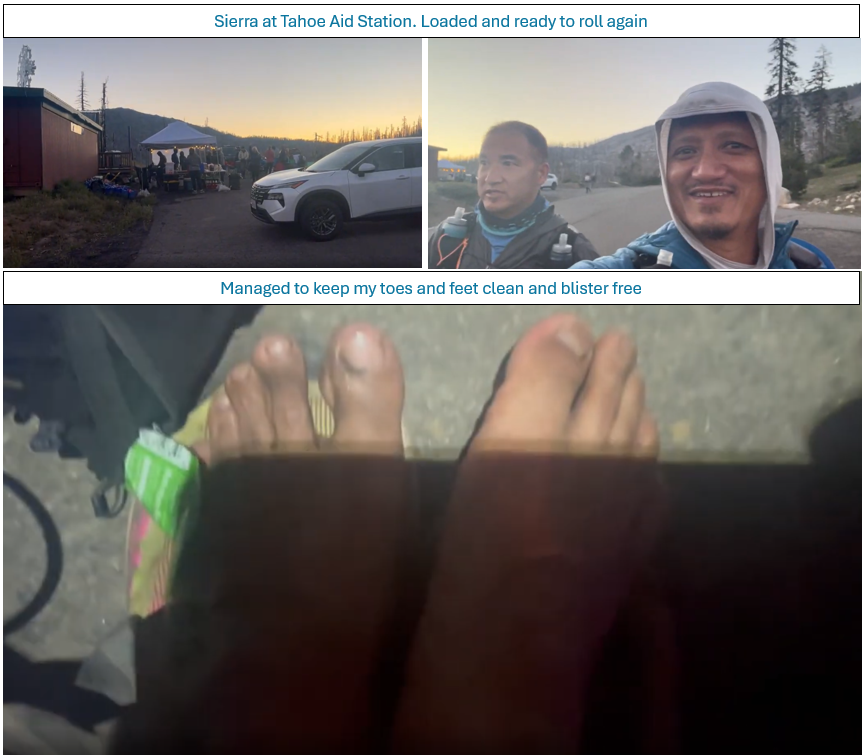
The sanctuary of the aid station brought a fleeting moment of relief. I immediately stripped off my battered socks, threw down highly concentrated Precision Hydration tablets to ward off cramping, and collapsed onto a canvas cot. I desperately sought the oblivion of sleep, but the mountain chill and the ambient chaos of the medical tent shattered my focus; my eyes snapped open after a mere fifteen minutes. Recognizing that true sleep was a lost cause, I pivoted to a state of active readiness, shifting to a chair, systematically changing my gear, and mentally bracing for the staggering 18.5-mile wilderness gauntlet ahead. With cots at a premium, Govinda adapted, wrestling his way onto a flat floor pad and burying himself beneath a heavy stack of blankets. He managed to claim a solid 45-minute nap while I kept watch. When he awoke, we prepared to step out into the dark. We knew the trek to Wrights Lake was one of the longest, most punishing stretches of the entire course. Safely packing our gear and loading our packs with critical calories, we stepped out of the oasis and back into the wild.
Leaving the station behind, a quick phone call with Anju, Rayna, Aatish, and Shakti flooded me with emotional strength. Hearing their voices made the vast wilderness feel small, making me feel as though I were right back home with them. I needed every ounce of that fuel. This next segment was a post-apocalyptic landscape. We entered the heart of the old burn scar. Entire mountainsides stood charred, black, and dead, completely choked by thousands of fallen, overlapping trees. It became an exhausting, dangerous game of high jump and limbo. We crawled under sharp, jagged branches and leapt over massive trunks. The physical toll was severe. We later learned an elite runner suffered a massive head laceration from a branch in this exact section and had to be hospitalized, ending his race. The same dark fate nearly claimed Govinda. Attempting to vault a massive log on a rough, unmarked section of the trail, his footing gave out. He fell sideways through the air, narrowly catching a broken branch that stopped a catastrophic injury. My heart stopped. Once I knew he was intact, I had to let him know being smart. We are running brothers; we don’t do reckless stunts, we protect each other from pain, and we cross that finish line together.
By mid-morning, the scorching sun was beating directly on our backs as we ground out a brutal, exposed 3-mile asphalt climb. I pushed the pace uphill, briefly trading strides with Ekta and few other runners from India before she forged ahead. Exhausted and overheated, I collapsed onto the cool dirt for 15 minutes to wait for Govinda before facing a chaotic, un-marked wilderness section. The trail simply vanished. I kept my eyes glued to my Gaia GPX navigation app to keep us from wandering off into the dangerous, trackless backcountry. After another technical, mile-long struggle through dense, broken branches, a cool, welcoming stream finally crossed our path. Refusing to waste the opportunity, I dumped the pristine water over my head and shoulders to drop my core temperature, while Govinda took a full, massive dunk into the river. Rejuvenated, we hiked the final mile into Wrights Lake at 2:30 PM, where I devoured the greatest slice of pizza of my life, washed it down with Ginger Ale and ice-cold water, and enjoyed a well-deserved 90-minute rest.
Still alert and balanced to cross the stream
Climbing steep 3 mile stretch on blacktop around noon was no fun

Walking into Wrights Lake Aid Station
At 4:00 PM, another runner from India, Bharathi who was doing her first 200 miler, tagged along with us as we pushed toward Loon Lake. Her unwavering focus became its own kind of gravity on the trail; she had a definitive goal and an absolute determination to stay on time, refusing to let the unpredictable nature of the rugged terrain dictate her pace. If the fallen trees were a physical trial, this section was a psychological horror film. This portion of the trail had been unused for seven years; the path was entirely strangled by overgrown, wild bushes that made finding a foot placement nearly impossible. To make matters worse, swarms of voracious mosquitoes descended upon us. If you dared to pause for even 10 seconds, they covered your body, biting fiercely right through our tech clothing. It was an incredibly maddening, irritating war of attrition. When night fell, the landscape grew pitch black, and the trail dissolved completely. There were no markers. We were trapped in a dark maze, spinning in circles. Both Govinda and Bharathi began questioning our direction. Acting as the lead navigator, I stopped the group and demanded everyone pull out their respective Gaia GPX maps. This message was constantly ringing in my head “If I suffer, I suffer from my own mistake, but I won’t let you suffer because of me. Pull out your maps so all three of us can confirm.” My insistence paid off. Our execution was flawless; we didn’t wander off course by an inch, limping into Loon Lake at 12:40 AM on Sunday morning.

So many streams to cross… this is one of them
Navigating became really difficult. Full of bushes, shrubs and fallen trees
The aid station was packed. I tried to sleep on a floor mat but found rest elusive, so I retreated to a chair, changing my gear and resting my eyes for a shallow 30-minute nap. The cots were heavily backlogged, but after 90 minutes, one cleared, and Govinda seized the chance for a 45-minute sleep. This is where I saw Gayle and her friend. They were so helpful bringing me food and refilling my flasks. After two and a half hours of staging, we met Jessica, a runner turned into volunteer, a familiar face from the Arizona Monster 300, performing our mandatory gear check. With our flasks filled and our packs reloaded, we stepped out of the light and disappeared back into the dark, freezing trail.
Limping into aid station with much needed rest and nutrition
Day 3: Hallucinations and Floating Skies
Barker Pass, Stephen Jones Memorial to Tahoe City
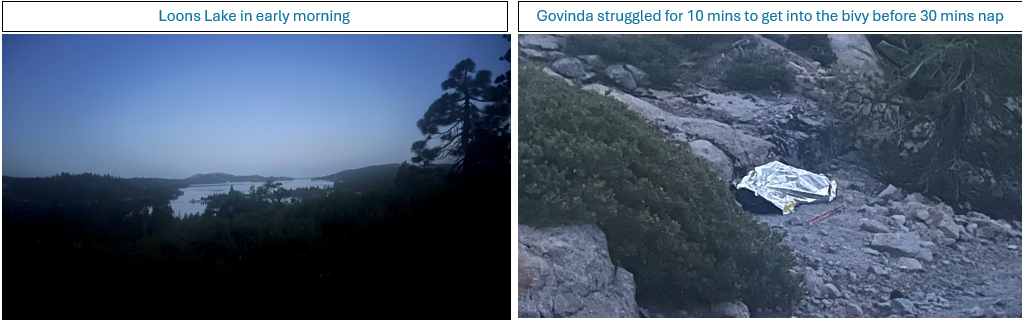
We left Loon Lake at 3:10 AM on Sunday morning, tracing the dark, quiet shoreline. Barely 3 miles into the cold night, the crushing weight of sleep deprivation brought Govinda to his knees. He desperately needed to stop. I couldn’t help but chuckle through my own fog of exhaustion as I watched him spend 10 agonizing minutes trying to wrestle his way into a crinkling emergency space blanket. He finally managed to snug in, but the victory was short-lived; 20 minutes later, he shivered awake. The fragile plastic had torn, letting the freezing mountain air rush in. Defeated by the cold, we packed up and marched onward. Our path tilted upward, funneling us directly into a massive river basin choked with colossal, flat boulders. This was the infamous Rubicon Trail, a notorious off-road vehicle track. Even in the pre-dawn darkness, the area was alive; massive overlanding trucks with giant four-wheel-drive tires lined the canyon, their thrill-seeking owners camping out under the stars.
After cresting a short hill, the mountain threw us down a brutal, steep descent packed with loose, shifting rocks. This two-mile stretch was pure physical torture, systematically destroying the soles of my feet. Reaching a brief flat canyon floor, we were immediately confronted by a near-vertical 1,500-foot wall of dirt. One slip felt like it would send you tumbling all the way back to the bottom, but we ground it out, step by agonizing step. At the summit, the trail flattened out, leading us into a bone-chilling mountain stream. Refusing to let my shoes get wet, I tied the laces together and hung them around my neck, wading barefoot into the water. It was so piercingly cold it triggered an instantaneous, blinding brain freeze. Shivering on the opposite bank, I forced my numbed feet back into dry socks and shoes, and we stepped into one of the most brutally exposed, sun-scorched sections of the course. The heat was searing. Then, out of nowhere, a voice echoed through the shimmering air: “Ramesh!” I spun around in surprise. It was Aum Gandhi, a trail brother from the 2022 Moab 240, out here pacing his girlfriend. Seeing a familiar face in the trenches provided an instant spark of joy, and we spent a few minutes laughing and trading stories about his recent adventures.
Balancing beam. You gotta try it
Crossing the stream. The water was bone chilling cold
I am not taking any chances with my only dry pair of shoes. Shoes around the neck

Another 30 minutes of marching through the furnace brought us to Barker Pass at 11:20 AM. I was completely parched. I bypassed the water jugs and rapidly downed five consecutive glasses of ice-cold lemonade, a heavenly relief that washed away the chemical taste of endurance electrolytes. We spent 30 minutes shedding our heavy gear, changing into thinner layers, and resetting our minds.
Finally the Barker Pass Aid Station
Next was the Stephen Jones Memorial station, seven miles away at the base of Lake Tahoe, requiring a rapid 1,500-foot drop. The first two miles were crazy steep, forcing us to move briskly. But by mile three, a cold anxiety seeped into our thoughts. We had always aimed to maintain a comfortable 4 to 5 hour buffer against the cutoffs, but our extended stay at Sierra at Tahoe, Wrights Lake and Loon Lake had sliced that cushion in half. The fear of the clock ignited a fire. Govinda and I ripped open two packs of energy gels, and began rumbling down the trail. We hit a flat road that bled onto a blacktop bike path tracing the edge of Lake Tahoe. This sudden change in terrain was a beautiful gift to our bruised feet and fragile psyches. We opened up our stride, burning miles at an astonishing 10-minute pace until we flew into the lakeside aid station at 2:35 PM. I celebrated the milestone by devouring a fresh omelet, thick, cold slices of watermelon and 2 cups of lemonade.
Finally at the bike path. Change of trail was good for psyche and feet. Stephen Jones Aid Station
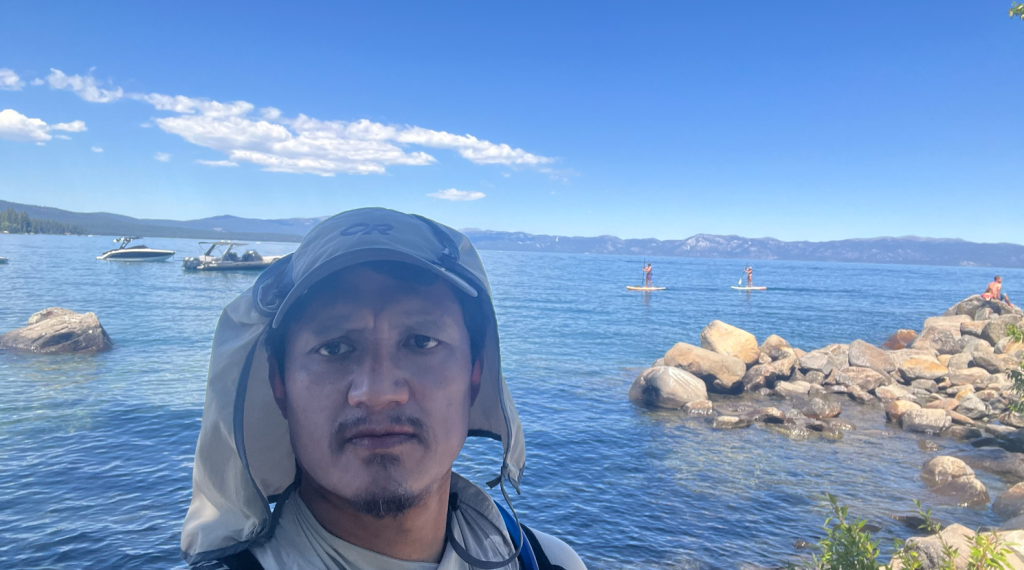
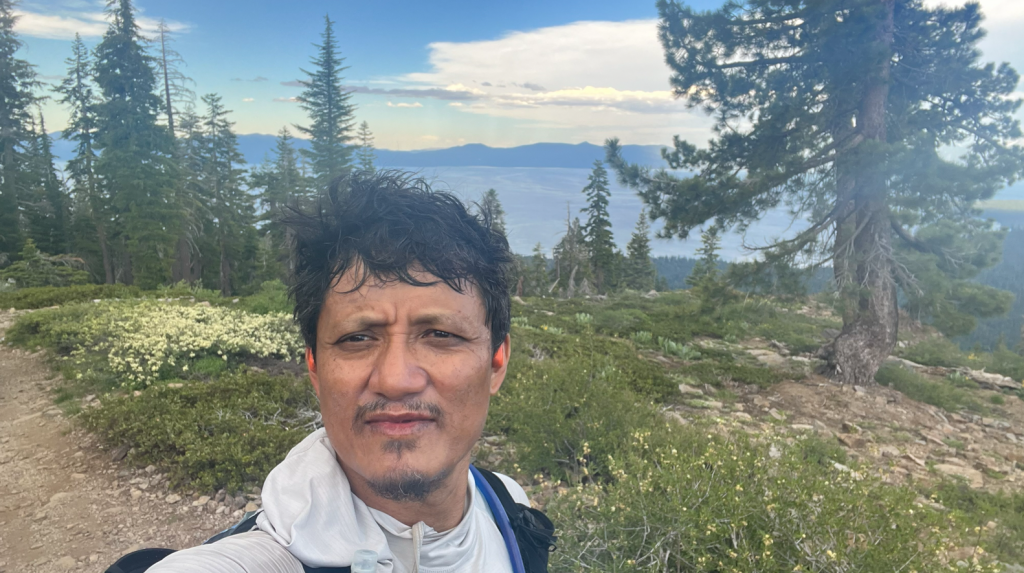
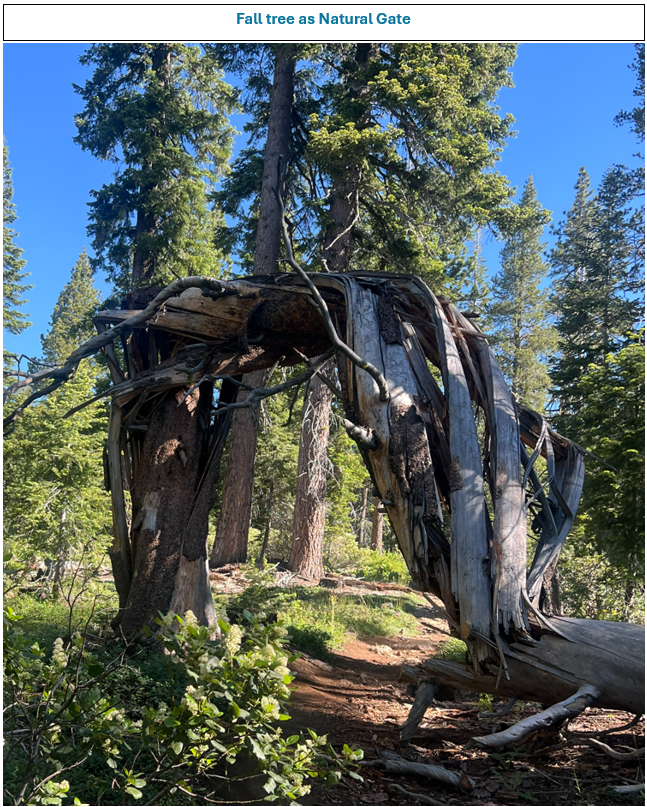
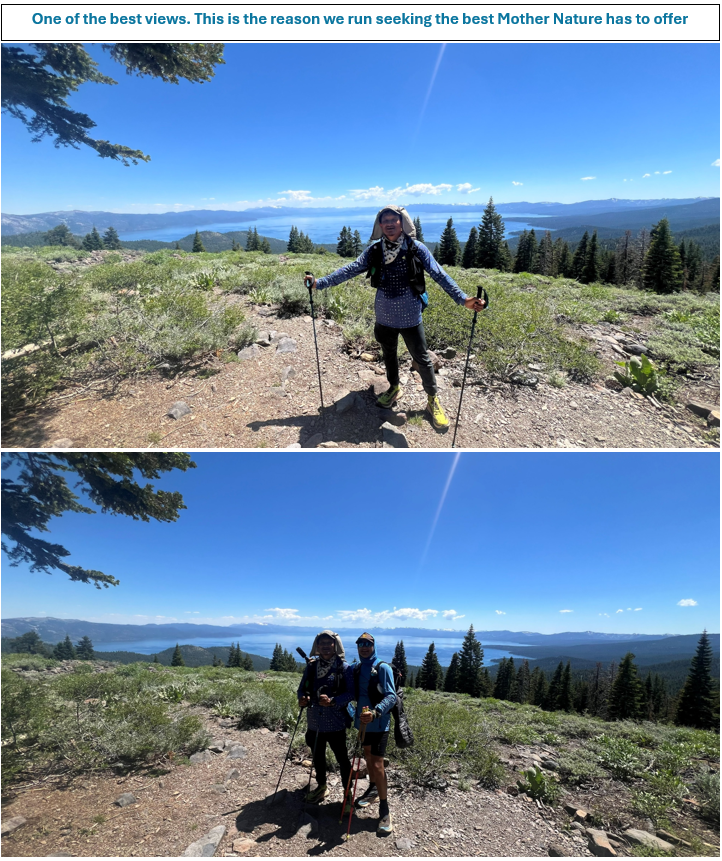
After a twenty-minute reset, we crossed Route 89 and stepped into the welcoming arms of Twin Peaks toward Tahoe City. This was the heavyweight segment of the day, a massive 19.5 mile journey beginning with a slow, gradual six-to-seven-mile climb. As we ascended, the midday heat and accumulated fatigue threatened to break us, but the sky suddenly split open. A violent thunderstorm rolled over the peaks, bringing a cool, steady drizzle. Instead of dampening our spirits, the raindrops washed the stagnant heat straight out of our souls. We climbed steadily for 2 ½ hours, finally topping out on a pristine crest at 8,400 feet. What we saw left us completely paralyzed. The vast, emerald-blue expanse of Lake Tahoe stretched out below us under the clearing storm. From that extreme height, the water didn’t look like a lake; it looked like a floating sky hanging suspended in infinite space. It was so utterly mesmerizing that every ounce of physical agony, every sleepless hour, and every phantom pain melted into absolute nothingness. We stood on the edge of the world for 15 minutes, completely silent, capturing photographs of a moment that words could never fully describe. When we finally tore ourselves away, the remaining 9 miles were a beautiful, runnable downhill. We jogged as much as our battered bodies allowed, entering Tahoe City at 10:30 PM.
Intense climbing…hoping for a good view
Seems like Lake Tahoe is floating. Video doesn’t do the justice
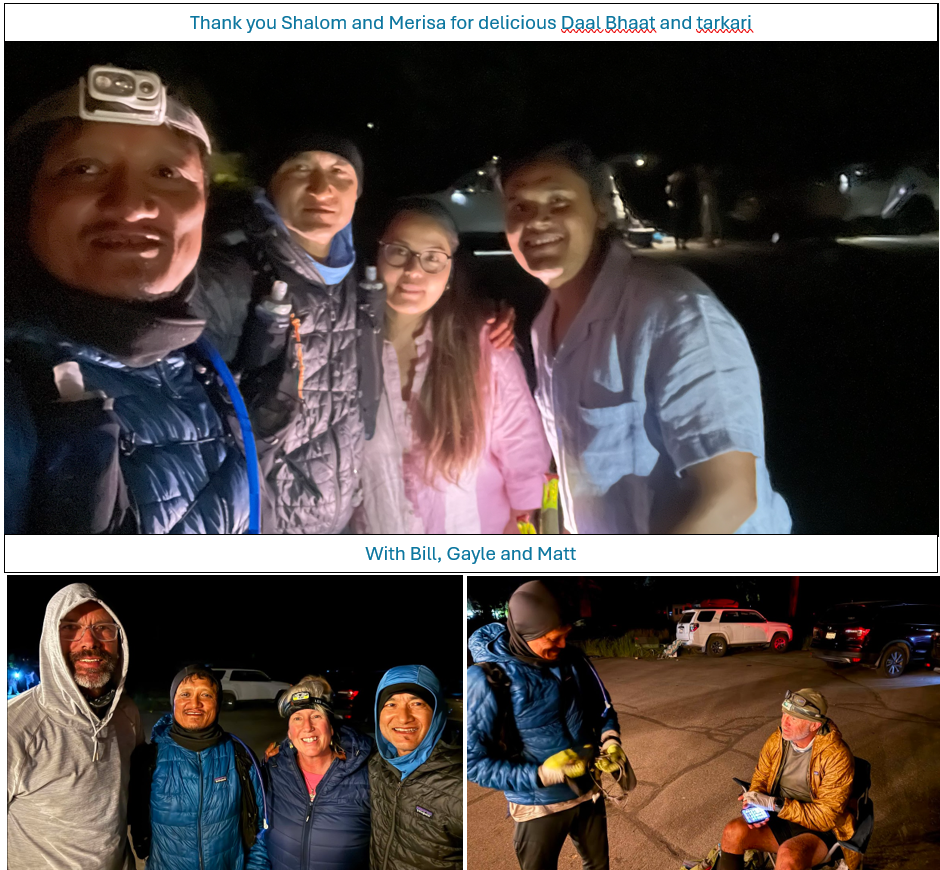
There, an incredible surprise awaited us. Govinda’s cousin, Shalom, and his partner, Merisa, had driven all the way from the Bay Area the night before. Because we arrived thirty minutes before they reached the checkpoint, Govinda and I knocked out our rudimentary chores, filling flasks and prepping gear. When they arrived, they laid out a hot, fresh feast of authentic rice, Daal Bhat, and aloo. Eating our native food at mile 100+ completely transformed our psychological well-being. Nourished by family and the food of our homeland, our spirits were entirely reborn.
A good suprise waiting for us at Tahoe City Aid Station

Day 4: The Deflation of the Soul
Brockway Summit, Village Green to Spooner Summit
After spending about 2 hours recharging at Tahoe City, we headed back into the wild toward Brockway Summit, stepping into our fourth consecutive day without true sleep. We moved in a quiet, steady pack alongside Bill, Matt, and their pacer, slowly traversing a grueling 18.6-mile segment that forced us to climb one relentless peak after another. An hour into the dark, the invisible hammer of sleep deprivation hit Govinda like a physical blow. His mind was fading fast, and he begged to lie down right on the trail. But the mountain ridge offered no sanctuary; the ground was damp and cold, and the few dry patches we found were swarming with insects. He had no choice but to keep his legs moving like a zombie, shuffling forward until he could find a clean, dry space. We stopped frequently, pausing to let other runners pass us in the darkness. Our goal was never to race or overtake anyone; it was to execute our plan, protect our bodies, and reach the finish line completely injury-free.
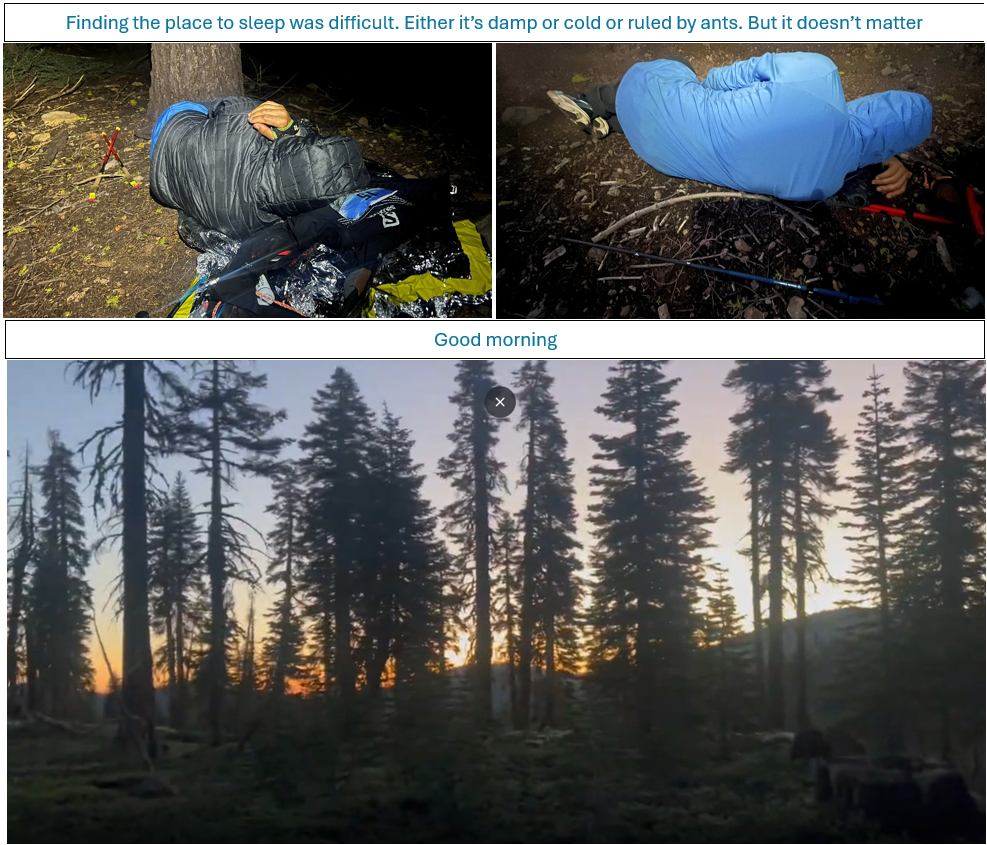
By this point, hallucinations began to fray the edges of my own mind. I looked down at a boulder and saw a small dog sitting calmly on the stone. I stopped, blinked, and stared hard. It wasn’t a dog at all, just a hollow opening in the rock. I shook my head, terrifyingly aware that my brain was misfiring. I desperately needed real sleep. After a final mile of downhill trekking, we finally limped into the Brockway Aid Station. I sat down for 15 minutes to settle my system and then collapsed onto a cot inside the medical tent. I prayed for oblivion, but twenty minutes later, the roaring snores of a sick runner and the suffocating heat of the tent shocked me wide awake. Realizing sleep was a lost cause, I grabbed my backpack and went outside to find an open-air cot where it was cooler, but my mind was too wired to drift off.
Limping into Brockway Aid Station
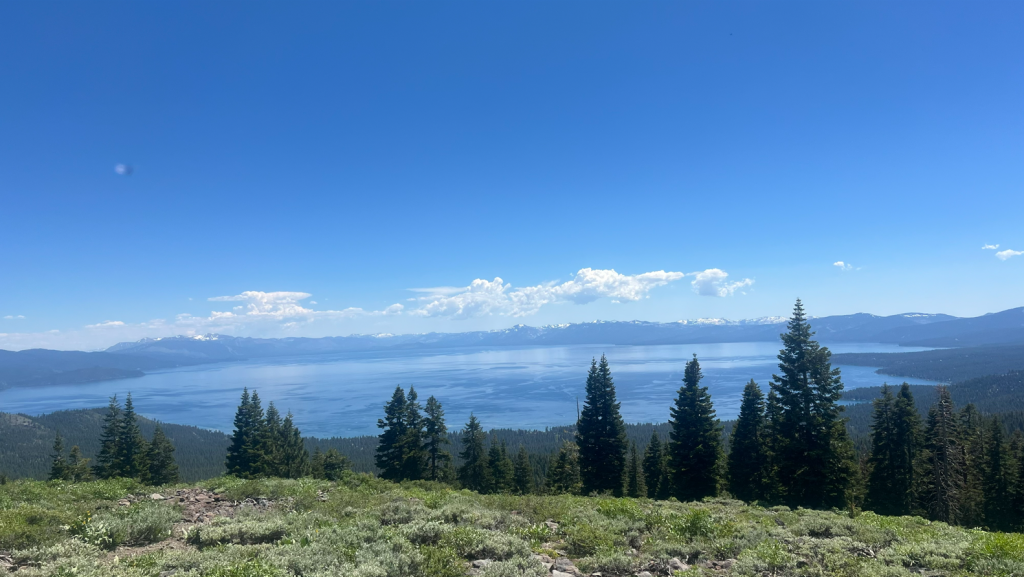
Instead of fighting it, I focused on nutrition. I drank four to five cups of a magnificent mango-watermelon slushy that felt like it melted straight into my soul. While Govinda slept, I devoured two rounds of fresh omelets alongside pasta, rich sauce, and crisp bacon. It was exactly what my body was screaming for, salty, familiar comfort food. Two hours later, fully refueled, we set our sights on the Village Green Aid Station, 15 miles away. After enduring segments of 17 to 20 miles, a 15-mile stretch actually felt remarkably short. We rolled out of Brockway Summit around 12:00 PM on Monday. After five miles of gradual descending and climbing, we crested a beautiful summit at 8,300 feet. We dropped down another four miles, and the trail suddenly opened up to the Crystal Bay Lookout. I stopped dead in my tracks. The view was an absolute masterpiece, a flawless, 360-degree panorama of Lake Tahoe shimmering beneath the sun. It was the exact moment of pure, captivating awe I had been searching for. But the mountain immediately demanded payment for the beauty.
What followed was a two-mile nightmare called Powerline trail: a near-vertical, treacherous sheet of loose sand and shifting pebbles. Walking normally was a physical impossibility. I watched another runner completely give up on his feet, drop onto his behind, and literally slide down the mountain, sacrificing his shorts to the gravel. I fell 3 times, but my final wipeout was spectacular. My feet launched into the air, and I slammed violently onto my butt. It took an agonizing, bone-rattling hour just to navigate to the bottom of that single hill. I waited about 5 minutes at the base until Govinda joined me on the blacktop road.
Really steep and unstable downhill section. About 2 mile stretch. Lots of runner fell and some broker their trekking poles
Nice way to save yourself from falling…but your butt 🙂
What followed was a boring, mind-numbing three-mile march on hot asphalt. My energy was entirely spent, and my feet throbbed with a deep, burning pain that felt identical to the low points of the Arizona Monster 300. After 40 minutes of grinding, we reached the Village Green Aid Station, welcomed by the smiling faces of incredible volunteers. I chowed down on fresh omelets, drank three glasses of lemonade and Ginger Ale, and managed to claim a solid, glorious one-hour sleep on a cot. Right on cue, the volunteers woke us up, ensuring we still kept our valuable time buffer for the push to Spooner Summit.
Spectacular view of Lake Tahoe. Our final night before the completion of the race
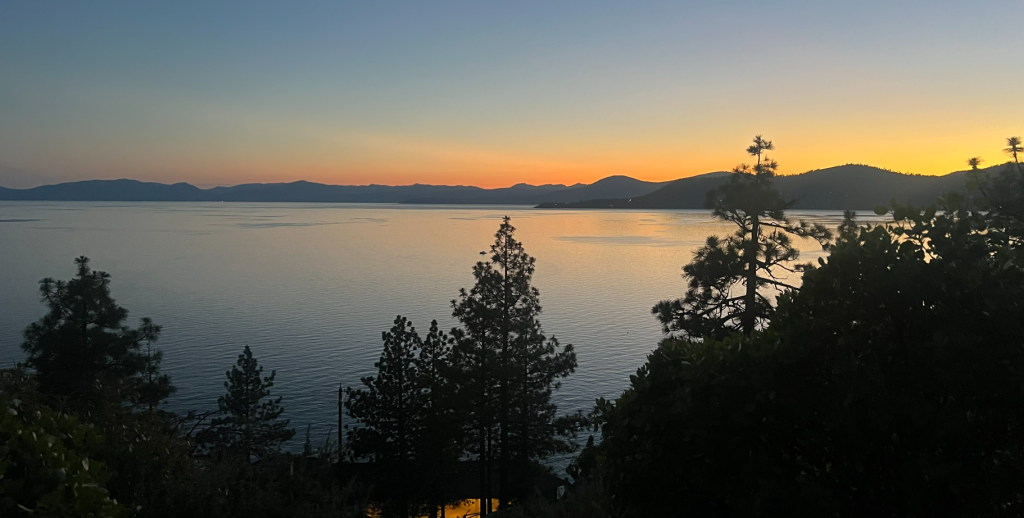
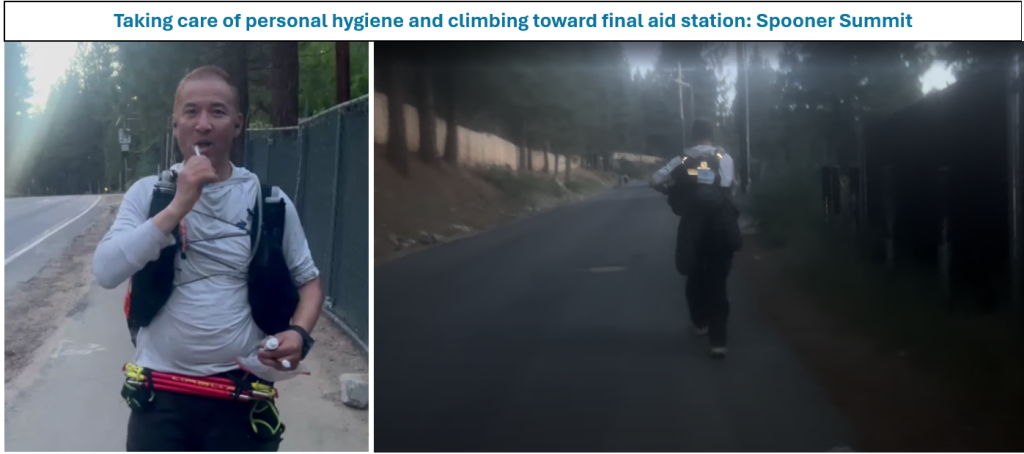
At 8:10 PM, we marched out toward our final checkpoint. After two miles of road walking and taking care of personal hygiene, we entered a wide dirt road built for mountain bikers. It was a long, gradual 11-mile climb, gaining roughly 3,000 feet of elevation. Surprisingly, this climb felt smoother, perhaps because the dirt road was wide open, or perhaps because our minds could finally sense the end of the journey. But then, the sleep deprivation came back for Govinda with a vengeance. He began walking completely un-mechanically, shuffling forward like a zombie and stopping to collapse wherever he could. I stepped into the role of the drill sergeant, constantly pushing, prodding, and refusing to let him slide into a dark psychological rabbit hole from which he couldn’t escape. I wanted to rush this final section. In a 200-miler, anything can go wrong at the very end, and I refused to leave anything to chance.

We walked under a brilliant, starry sky, sharing quiet conversations and taking brief breaks. Our watches clicked past 18 miles, but the forest remained pitch black and empty. No lights. No music. No aid station. Terrified that we were lost, I called Anju to check our live satellite tracker. Her voice came through the line, heavy with a stark reality: “You still have six miles to go.” It was utterly soul crushing. To our absolute chagrin, the official runner’s manual was wrong; the course had a hidden, extra two-plus miles tacked onto the tail end when our minds were at their absolute breaking point. A runner’s mind is a clockwork computer programmed entirely around initial mileage assessments, you mathematically calculate exactly how fast to run, how to pace your heart rate, and how long to rest based on those numbers. To have the goalposts moved at mile 180+ shatters your psychological armor. Standing there in the dark, completely broken, I sobbed silently, a necessary, raw release of pure, unadulterated pressure.
Then came the directive from Anju: “Stop sulking. You have no choice. Keep moving.” So we ran. Driven by raw, defensive anxiety, Govinda and I ran into a blistering, furious 11 to 12 mins per mile pace for the final two miles, bursting out of the tree line, crossing the highway, and storming into the Spooner Summit Aid Station.
I was too wired to sleep, so I immediately went to work on my routine, loading my flasks, prepping my gear, and sorting my nutrition for the final run to the finish line. I meticulously stripped my pack of every single ounce of non-mandatory gear; I wanted to fly down that final trail as light as humanly possible. Govinda, completely exhausted, collapsed and asked if I wanted to leave him behind to chase a faster finish. I looked at him and didn’t know what I said to him. But I was not leaving him alone. We started this Grand Slam together, and we will finish every single mile of it side-by-side. There are no ifs, ands, or buts. As I was relaxing on chair, I saw Ekta. When I had first crossed paths with her near Wrights Lake, she had looked completely bulletproof, but now she was preparing to head out in visible, agonizing pain from a severe back pain. Looking into her face, I could see the raw fear and deep suffering in her eyes. It was one of the hardest, most emotional moments of the entire race, witnessing a powerful, fierce competitor battle through such an unforgiving physical crisis. But looking at her, I knew the spirit of an injured runner is the most dangerous thing on the mountain. She would make it, no matter what.
Day 5: The Final Push and the Push-Up
The Finish Line
When Govinda’s one-hour alarm went off, the tent remained silent. I went over to his cot and found him buried in a deep, heavy sleep, entirely oblivious to the noise. I woke him awake. After fifteen rapid minutes of packing our flasks and prepping for the final segment, we stepped onto the trail around 7:00 AM on Tuesday morning, carrying a valuable extra hour of buffer in our pockets. The morning air was crisp, and the volunteers had given us a massive psychological boost, promising that the final stretch was a beautifully runnable trail. We set off into a five-mile climb. Unlike the punishing vertical sheets of loose sand from the day before, this ascent was smooth. Our bodies felt remarkably strong, our strides rhythmic, and we moved upward without a single hitch.

Two miles into the ascent, a familiar figure appeared on the trail. It was Ekta. She was stationary, taking a forced break to rest her failing back. For a brief second, I thought about trying to push her or pull her along, but she was wisely taking her time, managing her own crisis. Overcome with emotion, I stepped forward and wrapped her in a powerful, heavy hug. I looked her in the eyes, telling her how incredibly resilient she was. Tears well up in both of our eyes. As we parted ways, a deep instinct hit me: an injured animal is the most dangerous animal on the mountain. I knew with absolute certainty that her fierce spirit would carry her across that finish line, even if she had to crawl, though I silently prayed the clock wouldn’t run out on her. With a heavy heart but a renewed sense of purpose, Govinda and I charged up the remaining climbs until we crested the final summit.


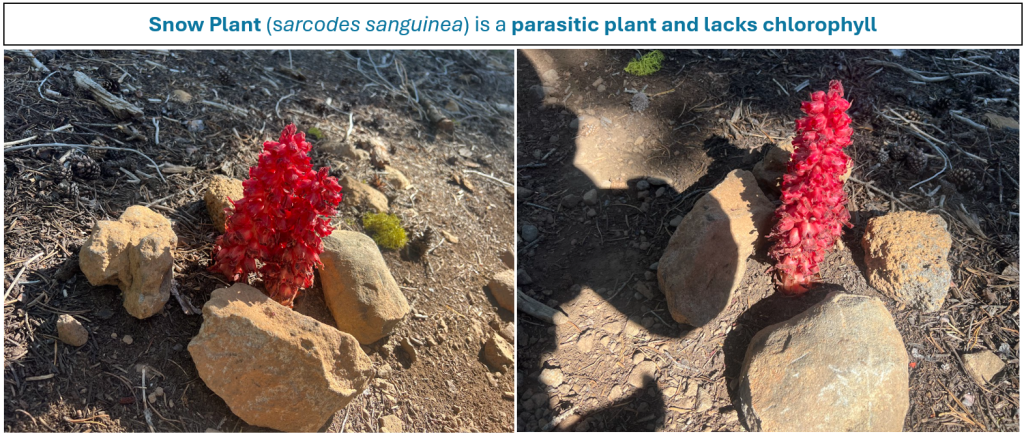
From there, we opened up our stride, gliding briskly down an eight-mile descent. As the sun climbed higher, the midday temperature began to bake the trail. Sensing the familiar, dangerous heat building in my shoes, a terrifying reminder of the horrific blister wars that I had in Arizona, I made a smart, proactive tactical decision. I stopped periodically to strip off my shoes, air out my socks, and thoroughly dry my feet. That simple discipline completely saved my skin, allowing me to outsmart the trail where I had previously suffered. As we broke through the trees, the finish line finally came into view. It looked tantalizingly close, yet the mountain had one final, cruel trick to play.

We still had five miles of trail remaining, and two of those miles pointed straight up. I had completely forgotten that the final approach required us to ascend the exact same brutal trail we had tramped down four mornings prior. We locked our eyes onto the dirt and tackled the never-ending two-mile hill, treating it as the final gatekeeper of our journey. We conquered the crest, turned the corner, and plummeted down the final descent toward the timing mats.
101 hours. 2 hours of total sleep (for me). 200+ miles of unrelenting mind games.
We crossed the line together, capturing a massive four hours of safety before the final cutoff at the welcoming arms of Shalom, Merisa and the cheering volunteers. A wave of profound, overwhelming relief washed over me. Yet, for a fleeting moment, a quiet hollow spot opened in my chest. My eyes scanned the cheering crowd, instinctively searching for my daughter, Rayna, and my niece, Salima and my family. They had been my absolute rocks, managing the chaos of the aid stations during my deepest struggles and highest joys in Arizona. Their physical absence left a quiet echo at the finish line. But technology bridged the vast oceans. My entire family in Nepal, alongside Anju, Aatish, my sister Rammaya, and family and our loved ones in East Coast, were glued to their screens, watching us cross live on the YouTube broadcast stream. Knowing the immense weight of anxiety they had carried for four days, I knew our finish was as much a relief for them as it was an exhilaration for us. I wanted to send a clear, definitive message across that digital camera lens to everyone watching at home, a sign that the mountains had tested me, but my spirit remained completely unbroken. I dropped straight to the ground, right on the timing mat, and delivered a flawless, picture-perfect push-up.
THE FINISH LINE
A perfect push up after running 200+ miles, 101+ hours with about 2 hours of sleep


Two down. The Grand Slam lives on.
Approximate Race Stats
MILES: 200.4 miles, Loop. From DC to Baltimore 5x (approximate 40 miles)
Great Himalayan Trail — 325 kilometers on this high route means traversing multiple massive mountain ranges back-to-back, trekking all the way from the base of Kanchenjunga in the far east, through the rugged wilderness of Makalu-Barun, to the high ridges of the Everest/Khumbu region.
CUTOFF: 105 hours
ELEVATION GAIN: 32,093’ (feels more than that). More than climbing Mount Everest
Total Time: 101+ hours
Total Sleep: about 2 hours
Think about a standard work week. If you start a grueling, high-intensity job at 9:00 AM on Monday morning and work straight through the day, through the night, through Tuesday, through Wednesday, through Thursday, and finally clock out at 2:00 PM on Friday afternoon, that is 101 hours. Now imagine doing that while constantly climbing, descending, and moving forward on your feet through changing weather and rugged terrain, pausing only for a total of two brief 60-minute resets.
Average altitude: 7,000 – 7,500 ft. Running in this altitude is totally different. It quickly plays mind games in your brain. I could feel my temple throbbing when we summitted the highest point, about 9,800 feet
Average Calories burned: 38,000 is the equivalent of eating:
- 70 original crust pizzas topped with chicken and jalapeños.
- 380 energy gels or specialized chews (at roughly 100 calories each).
- 140 dehydrated backpacking meals, like Chicken Pesto Pasta or Butternut Dal Bhat.
- 76 plates of a traditional, heavy Newah feast like Samay Baji or Jhwa Bhwaye.
Estimated Sweat loss: 26,000 ml (26 liters or 6.87 gallons). That means I had to hydrate a lot which I did including
- 26 liters of water weighs exactly 57.3 pounds (26 kg).
- If you did not continuously replace this fluid while moving, you would lose over a third of your total body weight to dehydration, level that is medically impossible to survive.
- To stay upright and moving, the body has to function like a high-volume water pump, absorbing and cycling a massive weight of fluid while under intense physical stress.
- 52 standard 500-ml water bottles or running flasks.
- 13 large 2-liter soda bottles stacked end-to-end.
- Nearly 7 standard one-gallon milk jugs filled to the brim.
Average Vertical Ratio: 8.7% (basically tons of climbing)
Average Steps taken: 550,000
What does carrying 20+ lb backpack through out the race means (101+hours)?
- A staggering 9.5 million pounds (approximate) of cumulative extra force being absorbed by our feet, ankles, knees, and lower back that a crewed, lightweight runner never has to face.
- Two giant, 10-pound bowling balls on shoulders.
- A large, heavy car tire onto back.
- Three standard gallons of milk and refusing to set them down while walking for four consecutive days and nights.
Gears and Nutrition
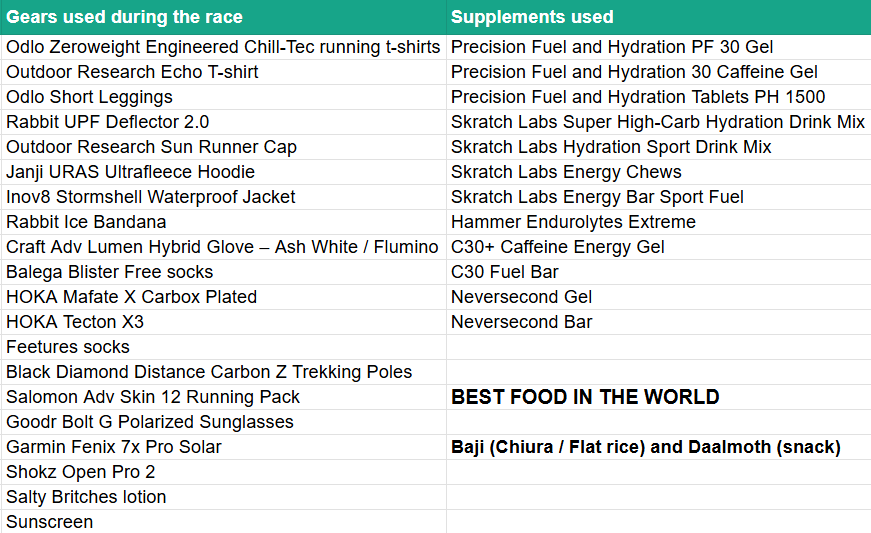
Mandatory ‘Before’ and ‘After’ picture

Acknowledgments: The Unbreakable Foundation
An expedition like the Tahoe 200 mile is never conquered alone. While our feet covered the miles, it was the immense love, belief, and sacrifice of our community that carried us across the finish line.
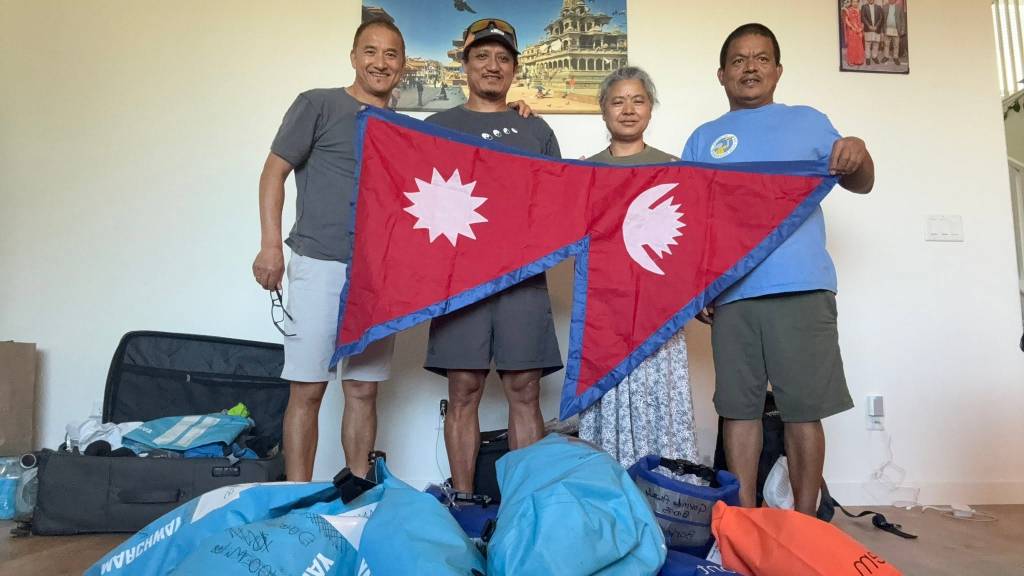
To Sangha ji, Rabita Maharjan (Kanchi dd, and the entire family), your boundless love and compassion became our true sanctuary before the mountains could even try to break us. By opening your hearts and your home in Sacramento, you provided something far deeper than mere logistics; you gave us a profound sense of belonging. Feeding us with authentic, sumptuous Newari food, Daal Bhat, Choila, Gundruk and other traditional dishes, you nourished our spirits and grounded our minds, making me feel as though I were standing right back home in Chyasal, Lalitpur, Nepal. That beautiful hospitality fortified us both physically and psychologically, sending us to the starting line with an unbreakable foundation of community and warmth.
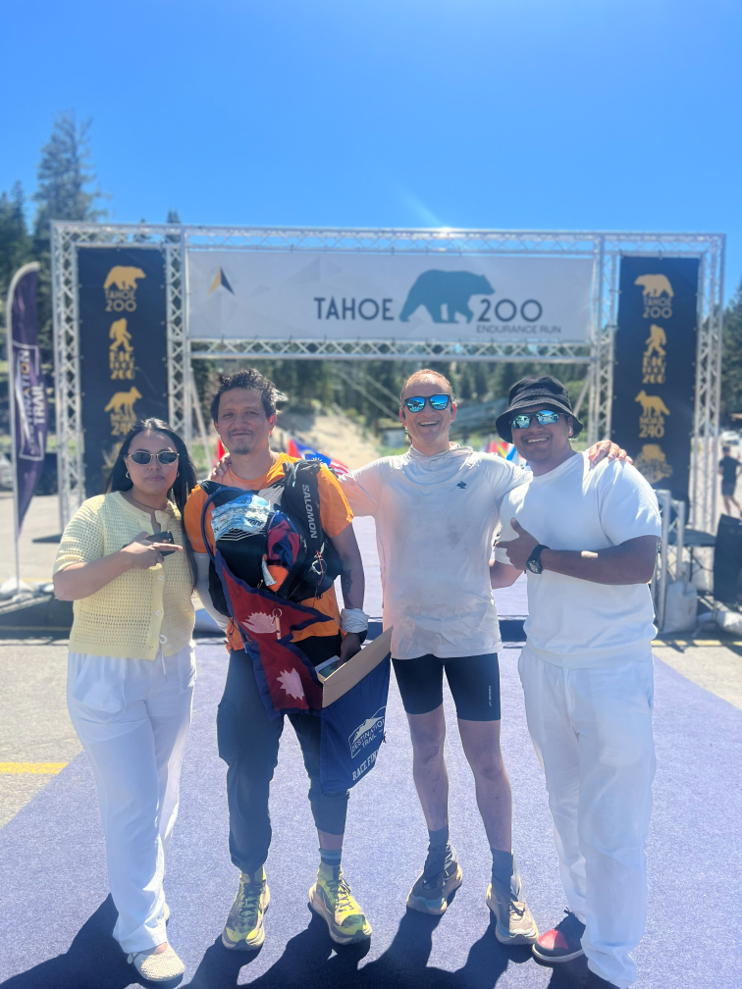
To Shalom bhai and Merisa, who drove all the way from the Bay Area into the dark of night just to meet and feed us at Tahoe City and welcoming us at the Finish line. Arriving to find a hot, fresh feast of authentic rice, daal, and aloo entirely transformed our psychological well-being when our spirits were beginning to flag. Thank you for being our lifeline when we needed it most.
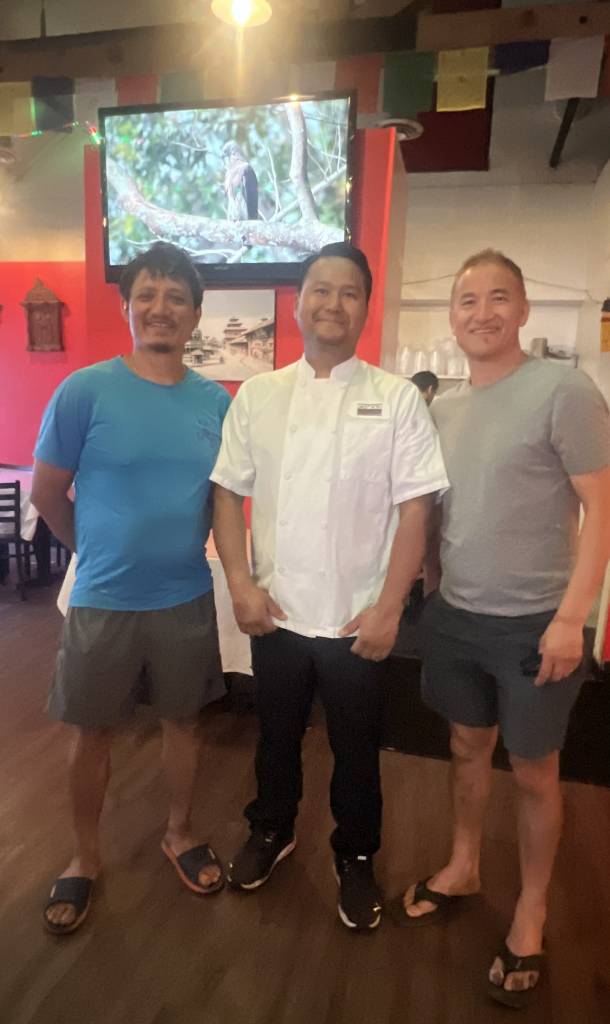
To Tej ji and the incredible family and staff at Shangrila Himalayan Kitchen, thank you for opening your kitchen and your hearts to us. You fueled our bodies with the comforting, rich flavors of home that sustained us through days of relentless effort. Tej ji and his wife showed us a level of kindness that is rare in this world; when we insisted on paying for our meals, they flatly refused to take our money, treating us like family rather than customers. Tej ji is truly one of the most humble, down-to-earth people I have ever met, and their generosity left a lasting mark on our hearts. If anyone ever finds themselves in South Lake Tahoe, please do your soul a favor and stop by Shangrila Himalayan Kitchen at 1142 Ski Run Blvd, South Lake Tahoe, CA 96150 for the most authentic, phenomenal Nepali and Indian cuisine you will ever experience.

To my rock, Anju, and my children, Rayna and Aatish, as well as friend/brother, Shakti, your voices on the other end of the line were the coordinates that guided me out of the darkness. Anju, your sharp directive to “stop sulking and keep moving” at mile 180 was exactly the spark I needed to shatter the despair and find my stride. Though I deeply missed having Rayna and my niece, Salima, physically commanding the aid stations like they did in Arizona, their spirit was embedded in every mile.
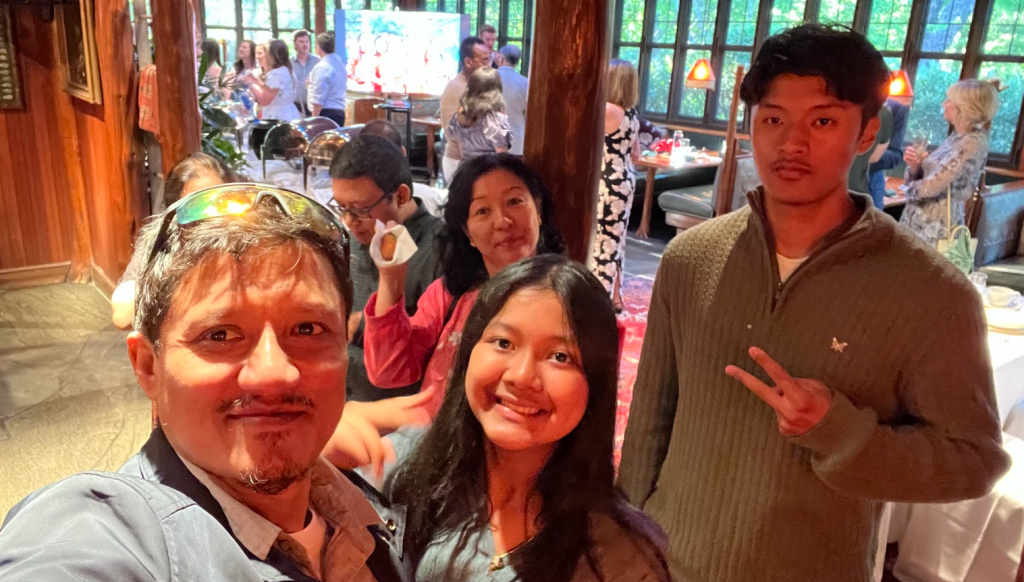
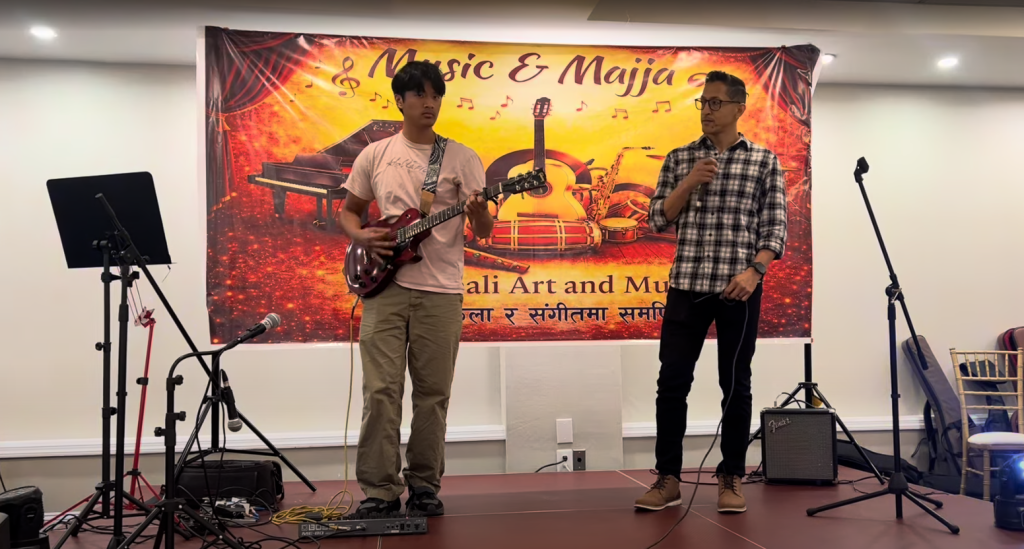
To my sister, Rammaya, brother Sanu, nephews Ranish (and Pat), Sanir, niece Roli (and Spencer), and my entire family back home in Nepal who constantly tracked me moving and watched the YouTube live stream, knowing you were watching over us from all over the country and the world gave every step purpose.
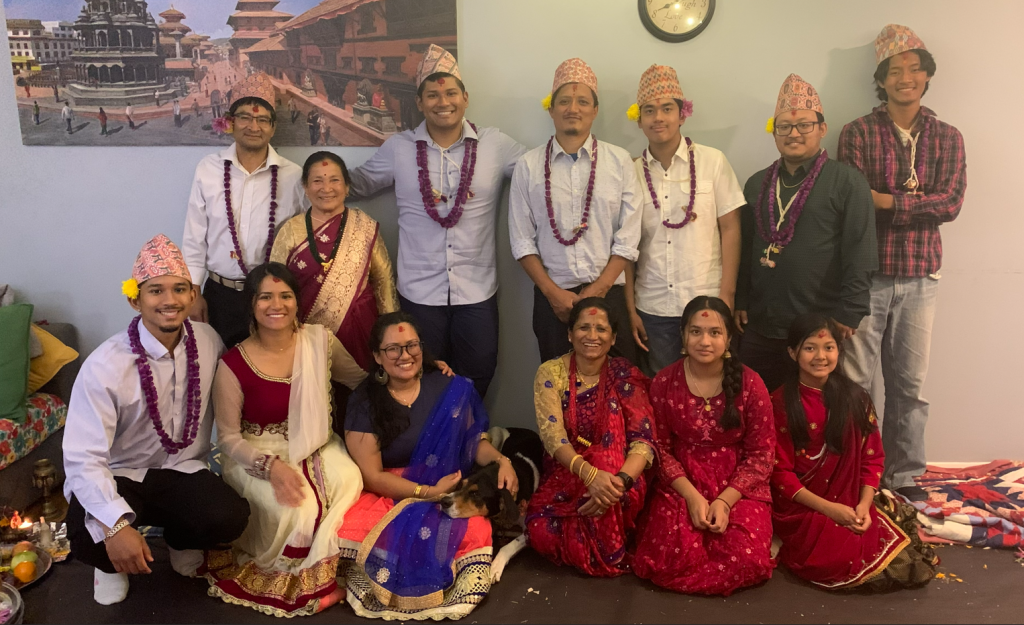
AND YES…MASSIVE ‘THANK YOU’ TO ALL THE VOLUNTEERS and organizers. Without you the race won’t be possible. So extremely grateful for your tremendous support and help.
NEXT UP ————-> BIGFOOT 200 August 14 – August 18, 2026
Date: Friday, August 14th. 2026 @12:00pm – Tuesday, August 18th, 2026 @11:00 PM
107 hours cut off (4 days, 11 hours)
LOCATION: Mount St. Helens
MILES: 207.9 miles, nonstop, point to point
ELEVATION GAIN: 45,563’
AID STATIONS: 12 full aid stations