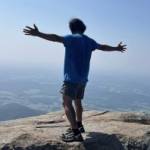
Mother Nature Doesn’t Negotiate
My uncle used to tell me: you are at the mercy of Mother Nature. You don’t conquer her. You don’t fight her. She decides what happens to you — all you get to decide is how you respond.
I went into Bigfoot 200 chasing something simple. I wanted to find my inner peace. What I found instead was my inner survivability, and I didn’t get a say in the swap. This is the story of 200.1 miles and just over 103 hours where the real opponent was never the course — it was the voice in my own head. That voice has beaten me before. I know its tricks. But this time, with my crew beside me and everything I had left in the tank, I fought it to a standstill and won.
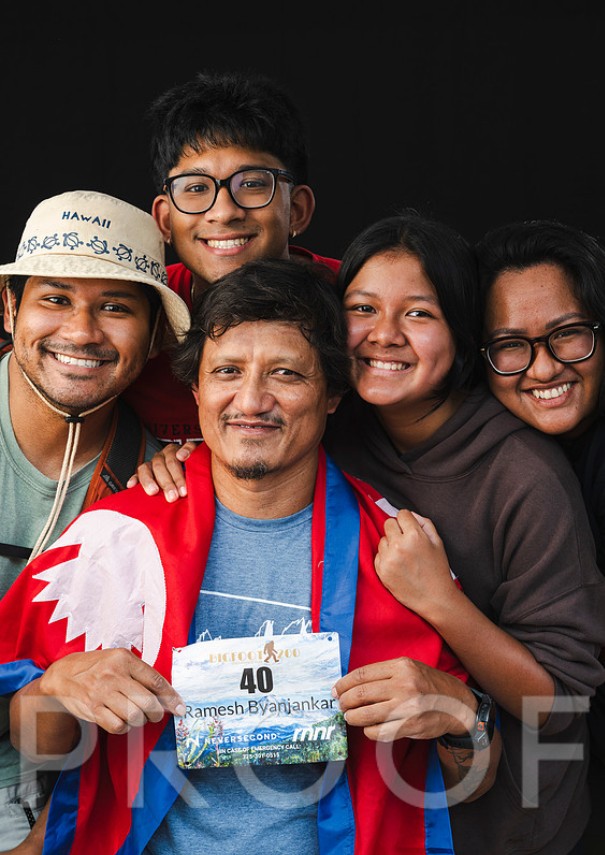
I crossed the finish line at White Pass High School in Randle, Washington on August 18, 2026, around 7:37 pm, alongside my running brother Govinda Awale and the crew that made it possible — my nephews: Sanir and Ranish, my niece, Sali, and my daughter, Rayna. I want to dedicate this race to them, because they worked harder than I did. While I was out on the trail, they were white-knuckling narrow, winding roads through the Cascades, spending hour after hour planning, packing, and prepping gear and food for whatever I’d need at the next stop. I’m still trying to figure out who deserves the title of best chief crew. I’ll settle that score by the end of this story.
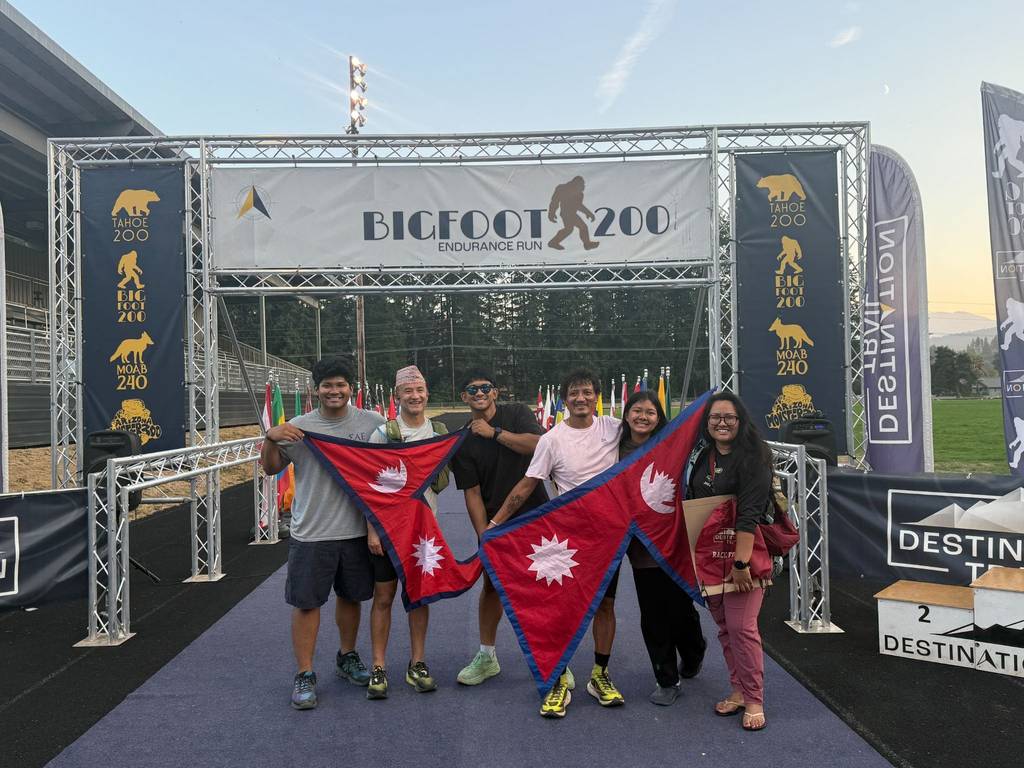
This was our third 200-plus-mile race in under five months, part of the Grand Slam of Ultrarunning — 715 miles down, and counting. AZ Monster 300 threw brutal heat at us. Tahoe 200 threw altitude. Bigfoot brought something different: relentless vertical climbs and descents that never let up. Of the three, this was the one I dreaded most, because of exactly that — the climbing, and even more, the downhills. It tested me in every way a race can, physically and mentally.
I hadn’t done any real hill training going in. I was still recovering from Tahoe, so my plan was simple — stay healthy, stay injury-free, swim as much as I could, and hope that was enough. It wasn’t, not in the way I expected. This might be the hardest course I’ve ever run. Mile after mile of steep climbs and steeper descents hammered my core until there was nothing left to give. I stopped trying to beat Mother Nature and started negotiating with her instead, crawling forward inch by inch when that was all I had. It came down to willpower. A mental game, start to finish.
Bigfoot 200: Race Overview
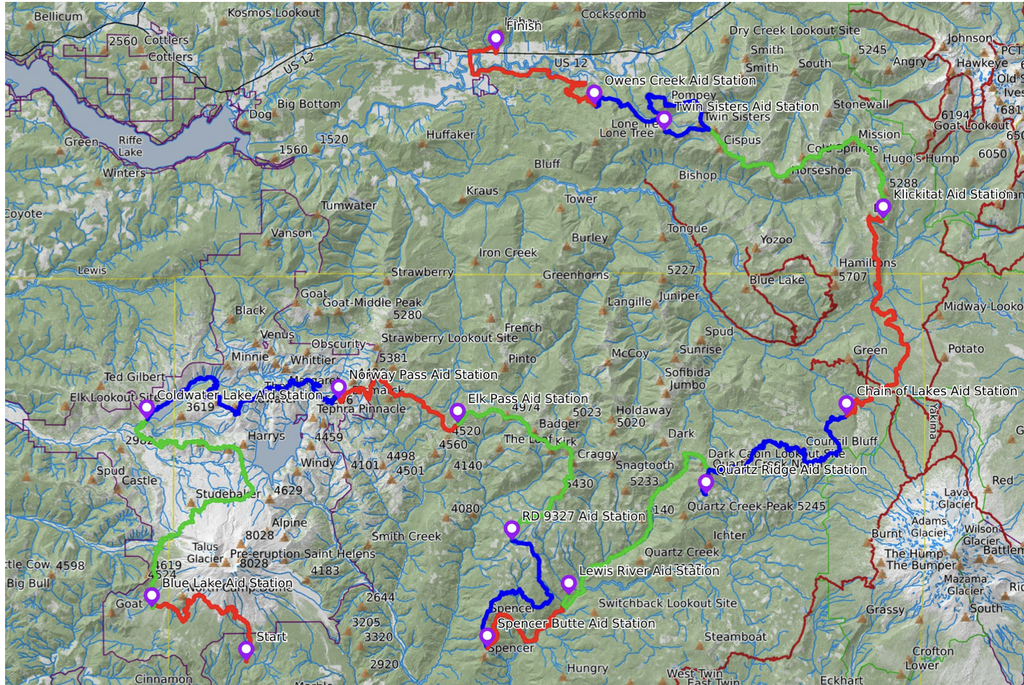
The Bigfoot 200 winds through the wild heart of the Cascade Mountains — a course that feels like it was stitched together from a dozen different worlds. You cross lava fields at the foot of Mount St. Helens, still otherworldly since its 1980 eruption. You run long ridgelines with views that stop you mid-stride — forests, mountains, and lakes stacked on top of each other for miles. You drop into old-growth forest so dense and green it feels like rainforest, climb into mist-wrapped peaks, and wade through stream crossings that never quite let your feet dry out.
Key Course Statistics
Distance: 200.1 miles (point-to-point)
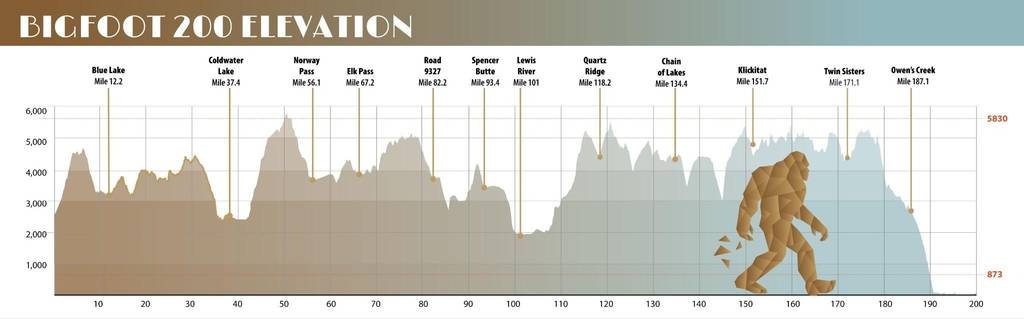
Total Elevation Gain: 44,082 feet / 13,558 meters
Total Elevation Loss: 45,563 feet / 13,890 meters
Support Infrastructure: 12 full aid stations, including 5 designated sleep stations
Getting to the Start
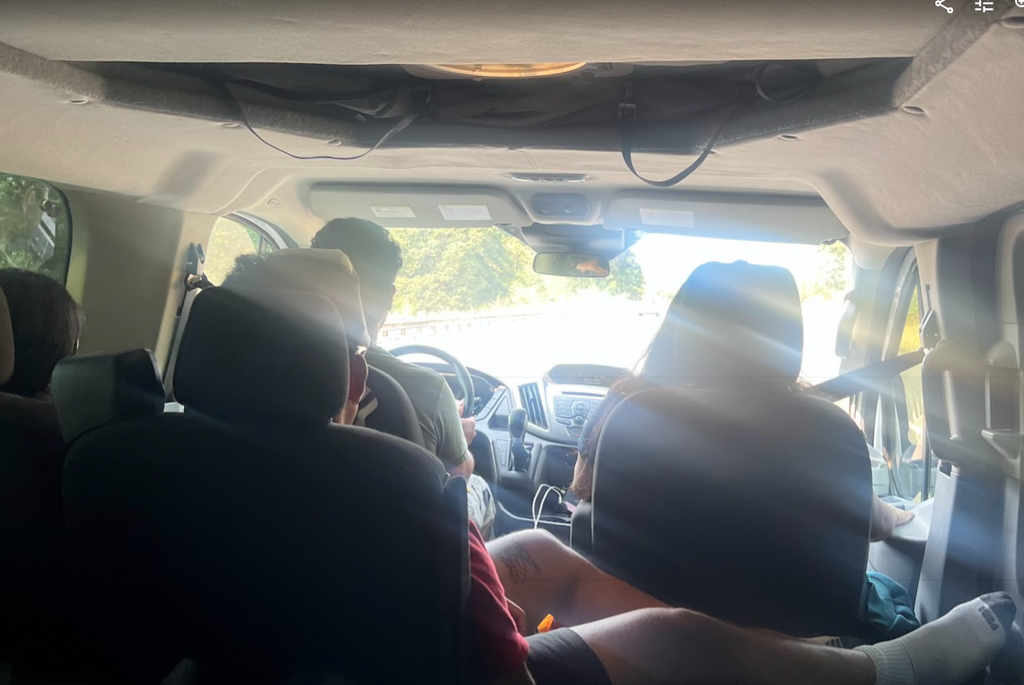
Rayna, Sanir, Ranish, Sali, Govinda, and I flew out on Wednesday, August 12, 2026, and regrouped in Portland, Oregon. From there it was race bibs, drop bags, and logistics — the unglamorous work that makes an ultra possible. We piled into our RV and drove to Randle for mandatory gear checks, health screenings, and bib pickup, a process that ate up three or four hours. Then we backtracked to our hotel in Longview, about an hour from the start line at Marble Point.
To My Strength: Rayna
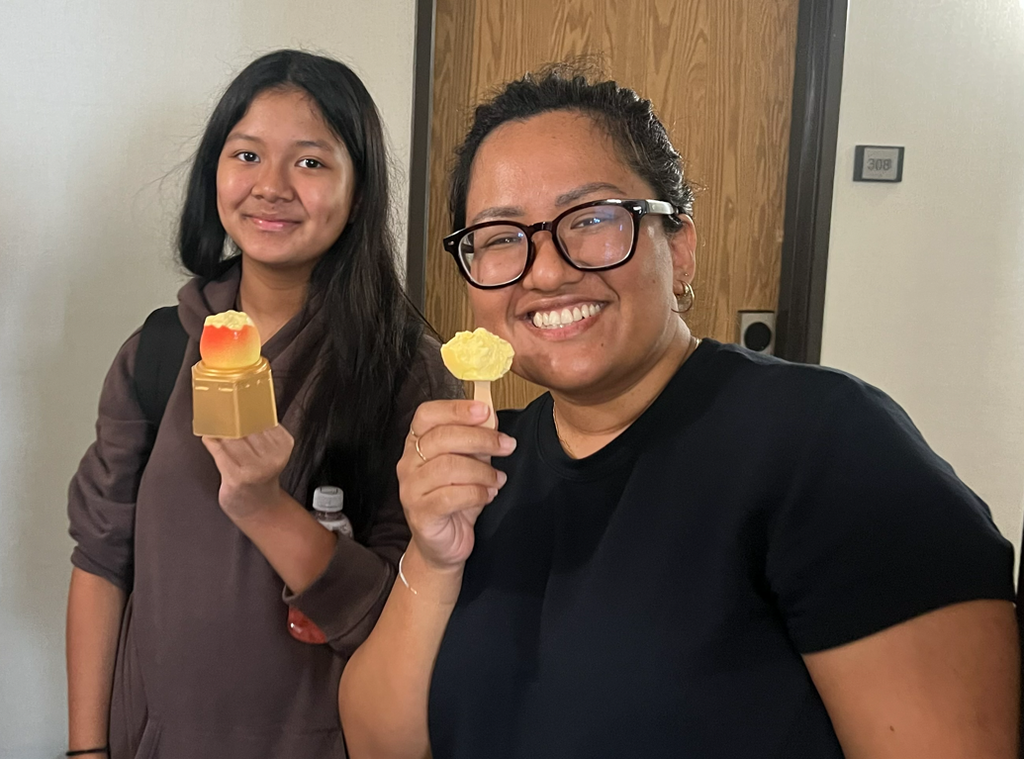
You were the reason I didn’t quit when everything fell apart that first morning. My stomach had shut down completely — I couldn’t keep anything in, couldn’t eat, couldn’t do anything but keep moving on empty. The only thing that kept my legs turning over was the thought of getting to hug you at the next aid station. One painful step at a time, you were the heartbeat that kept me out there.
To My Catalyst: Sanir
This was your first time crewing, and you walked in like you’d done it for years. Fast on your feet, all energy and hustle, you turned every aid station you touched into something alive. When Govinda and I rolled in completely wrecked, barely holding ourselves together, you were the spark that pulled us back out of the dark. You’ve talked about becoming a chief crew someday — watch your brother and sister this weekend, because that’s exactly what it looks like.
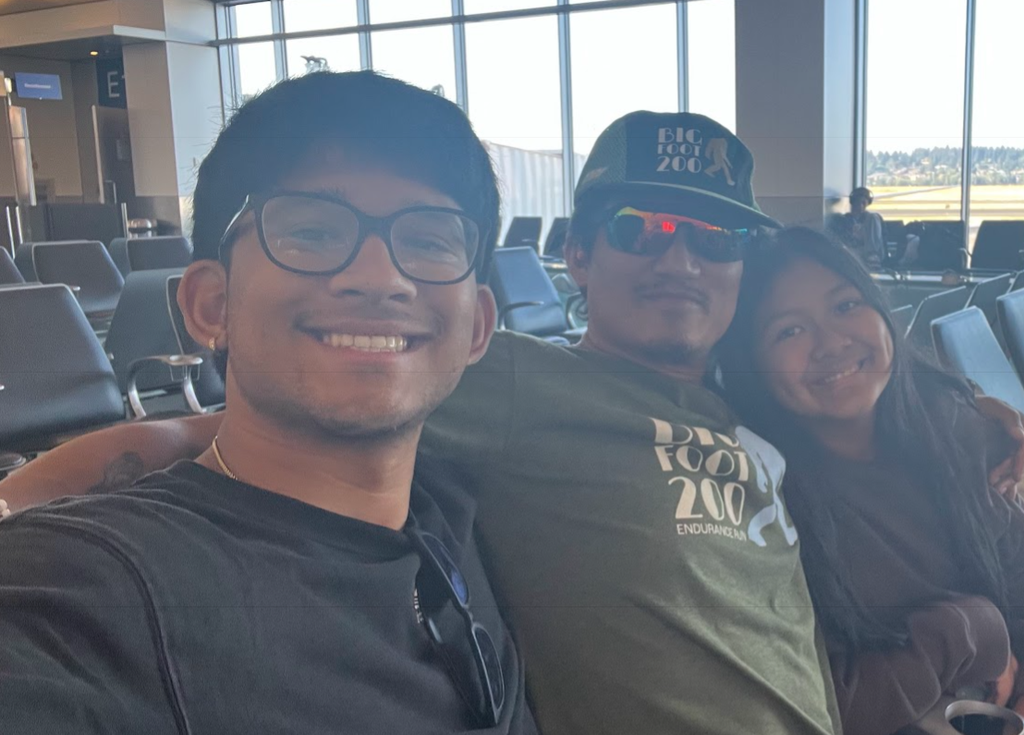
To My Generals: Salima and Ranish
I don’t have the words for what the two of you gave up for us. Just knowing you were out there was enough to know I wasn’t allowed to quit — you weren’t going to let it happen. You’d have done anything short of carrying me across that finish line yourselves. Everyone talks about the runners like we’re the ones doing the work, but you were the real engine. Chefs, logistics, medics, bodyguards — you wore every hat, and you did it with a patience that never cracked, even when Govinda and I were at our absolute worst. This race belongs to you as much as it belongs to us.
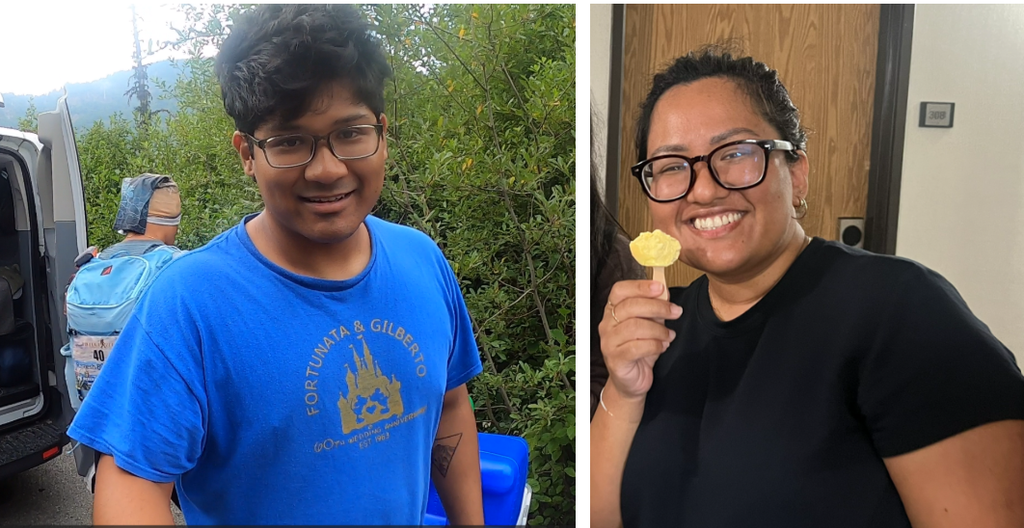
To My Absent Warrior: Aatish
Aatish, I know you couldn’t make it to this race. You were volunteering at the hospital, and I felt that absence every single mile out there. There’s a version of this crew that isn’t complete without you, and I felt it the whole way through. I really wanted all of you spend time together and learn from each other. If there’s one wish I’m carrying forward, it’s this: getting you out on the trail with me, whether that’s crewing or pacing at Moab 240, or maybe at Cocodona 250 next year. That’s a goal that matters to me as much as any finish line.
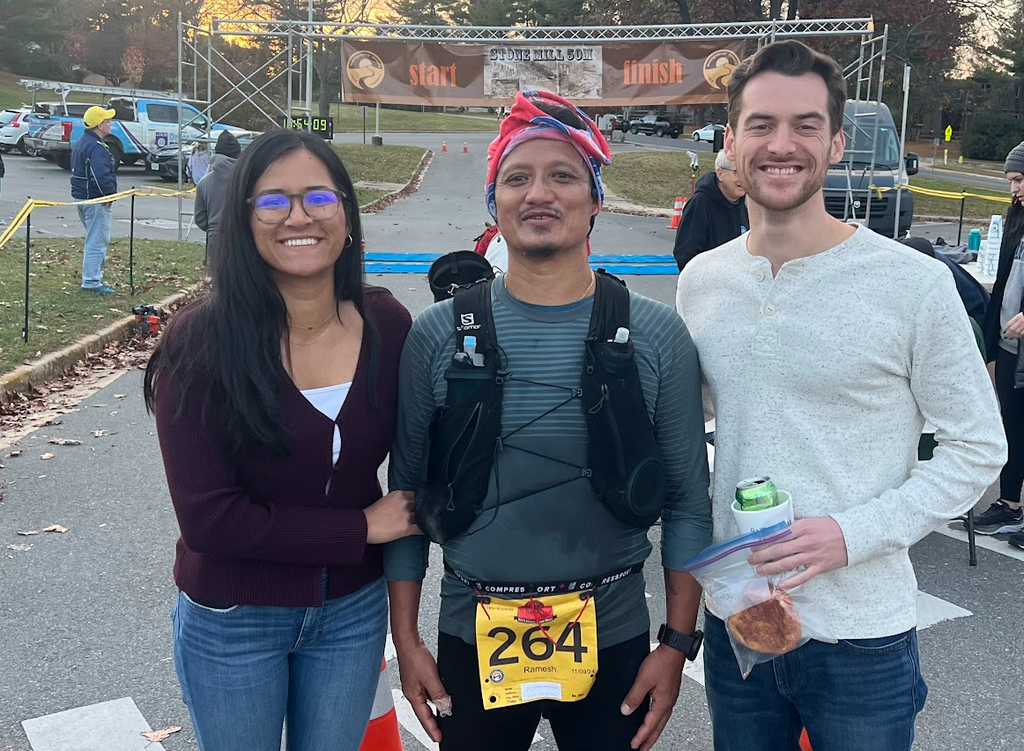
To My Someday Crew: Roli and Spencer
You haven’t had the chance to crew with us yet, but I’d love nothing more than to have you and Spencer out there with us someday soon. When that day comes, it’ll complete something bigger than just one race — every nephew, every niece, and my own kids, all having stood on the trail with me in some way, crewing or pacing. This crew keeps growing, and there’s a place for you both in it whenever you’re ready.
Day 1 (08/14/2026): Ledges, Volcanic Ash, and the Demon Awakes
The Start — Marble Mountain / Blue Lake / Coldwater Lake
We were all awake by 5 am that Friday morning, our bodies still running on East Coast time. For once, the time difference worked in our favor. After a solid breakfast of scrambled eggs, bagels, and coffee, we headed back to the room to get ready. Sali and Ranish went through my gear piece by piece, mandatory items and favorite snacks alike, leaving nothing to chance.
An hour of winding road later, we arrived at the starting line to pick up our satellite transmitters — the devices that would let our crews track us in real time and, if things went wrong, find us. After a restless 45-minute wait catching up with familiar faces, the race director gave us the line every Bigfoot runner knows by heart: “If you get hurt, if you get lost, if you die, it’s your own damn fault.” Ten seconds later, the fast pack vanished up the trail toward Mount St. Helens’ blast zone.
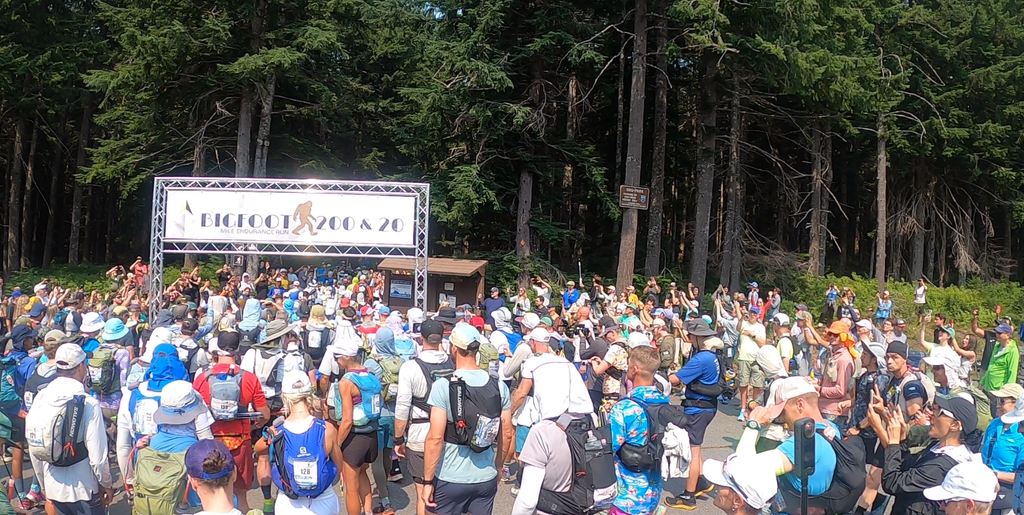
Into the Blast Zone
The first four miles were beautiful and crowded, runners shoulder to shoulder through the trees. Then the trail broke open into something else entirely — narrow trenches cut through volcanic rock and boulders, the raw scar tissue of the 1980 eruption still visible everywhere I looked. There was nothing soft about this ground. One bad step and your foot could wedge between rocks hard enough to end your race, or worse. I locked in on every footfall and made it through clean. Not everyone did — I passed runners nursing gashes and bruises, blood already drying on their shins.
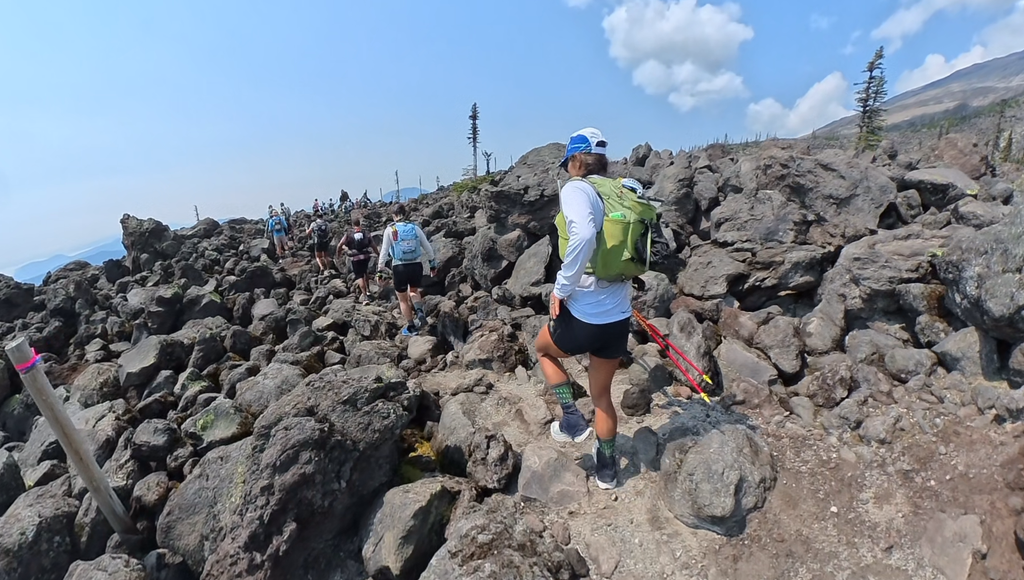
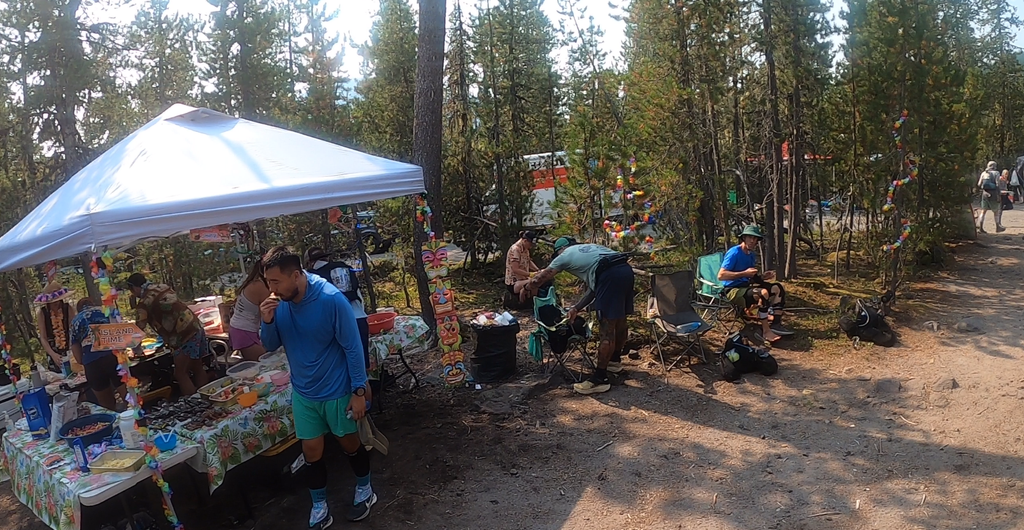
Three hours and forty-one minutes in, I reached Blue Lake, the first aid station, having already climbed 2,980 feet and dropped 2,490 in the process. I felt fast. My body disagreed. I refilled my flasks, stocked up for the 25 miles ahead — our longest stretch of the race — and braced for running it under a sun that wasn’t going to go easy on anyone.
The Ledge
After thirty-some minutes eating and waiting on Govinda, we set off into that long segment. Five miles of climbing later, we hit a wall of stopped runners — traffic, out here, at the edge of the South Fork Toutle River. This was one of the wilder parts of the course: ropes to lower yourself down to the riverbed, ropes again to haul yourself up the other side. Genuinely thrilling.
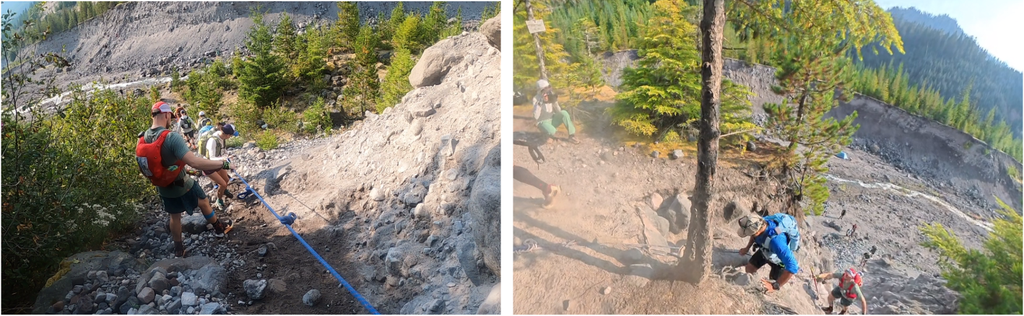
Then came the part that changed the tone of the whole day. After another mile or two of climbing, the trail thinned into an 8-to-10-inch sandy ledge — a tightrope with a 400-to-500-foot drop on one side. I never let myself look right. I kept my eyes forward, my shoulder brushing the wall to my left, and in a few spots there wasn’t even a ledge to plant my feet on. I have never been more afraid on a trail in my life. But I inched forward, foot by foot, until I finally cleared it — and the relief that hit me at the top was unlike anything I’d felt in a race before.
Was so scared, forgot to remove chiura crumbs in my lips 🙂
The miles after that opened back into blast-zone terrain, still marked by rock but nothing like what we’d just crossed. You could see exactly what the mountain had lost — one whole face of it gone, dissolved into ash and stone. I stopped to take a few photos, wanting to hold onto the memory. Somewhere in there I crossed paths with Tony Cline, well known in the trail running world for his race films — I’d watched hours of his footage while training for this. We shared the trail and a photo for 40 or 50 minutes before he pulled ahead. I want to personally thank him for everything he’s given the ultra community.
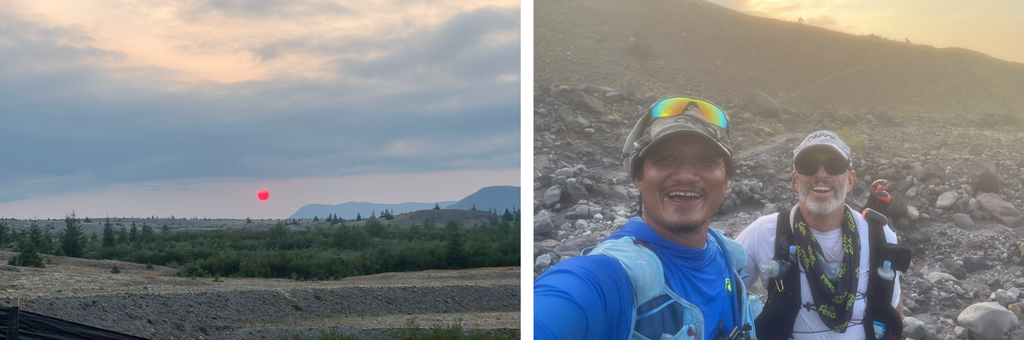
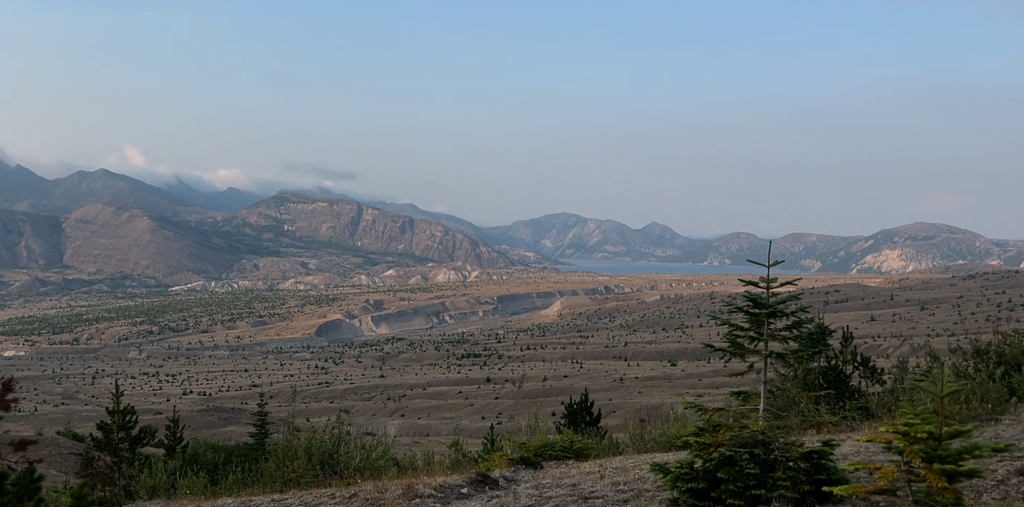

Nearly eight hours and almost a full marathon (25.6 miles) after leaving Blue Lake, I reached Coldwater Lake — another 4,002 feet climbed and 4,674 feet lost along the way. I rolled in around 11:41 pm.
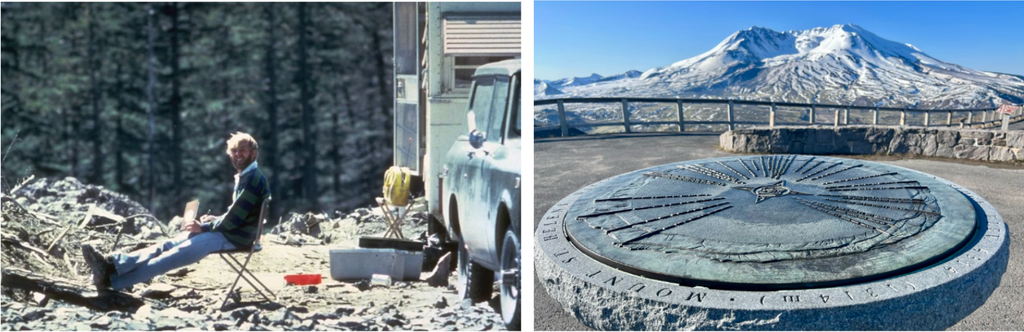
One of the solemn reminders is Johnston Ridge Observatory named after a 30-year-old scientist, David A. Johnston, a U.S. Geological Survey (USGS) volcanologist who died on the ridge during the catastrophic May 18, 1980, eruption. It reminds us that there are good people who sacrificed their lives to save others.
A Voice on the Walkie-Talkie
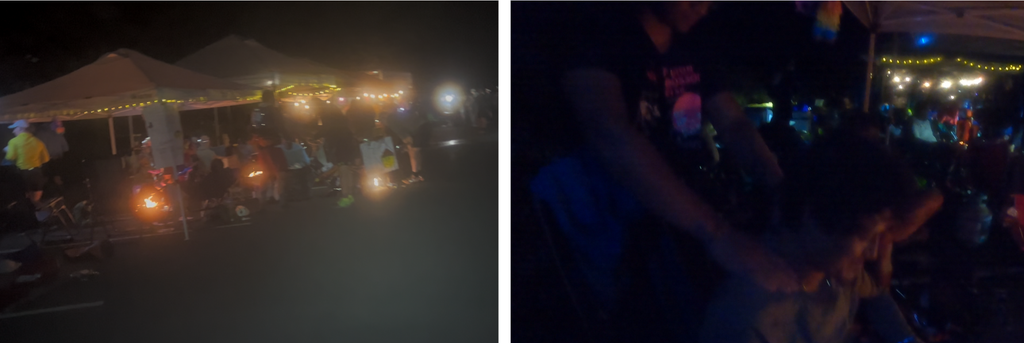
Govinda and I took about 20 minutes there — refilling flasks, cleaning up my feet, grateful for whatever the volunteers could offer. Mid-rest, my walkie-talkie crackled to life with Ranish’s voice: “Mama… are you there… we’re about 15 minutes from the aid station.” I hadn’t expected them — we’d agreed they’d rest and meet us later at Norway Pass, where we planned to sleep. But the pull to see them, and to grab warmer gear, was too strong to resist. Especially with no phone service out there, I was hungry to see familiar faces. We stayed an extra 30 minutes. Their hands on my legs, their steady presence — it recharged me for the 18 miles still ahead.
Sanir giving me much needed shoulder massage
Into the Dark
The cold set in hard as the night deepened. Sitting still let our bodies slip into rest mode, and the thick mist wasn’t doing us any favors. Just as we got moving again, we hit the mandatory gear check — thankfully my mini bag had everything in order, so it only cost me a minute. Some runners weren’t so lucky and had to backtrack for missing gear.
We stepped into the dark and started climbing. I fell in behind a couple of runners holding a steady rhythm. The trail turned genuinely frightening in a few places, the darkness stacking risk on top of risk. One section forced us across a wide rock face — I gripped the branches above me for balance, and right as I crossed, my right foot slid out from under me. If my left hadn’t been planted solidly, if I hadn’t had that branch in my hand, I don’t know what would have happened. No sheer cliff, but a 400-foot fall waiting below all the same. I thanked whatever was listening that I stayed upright.
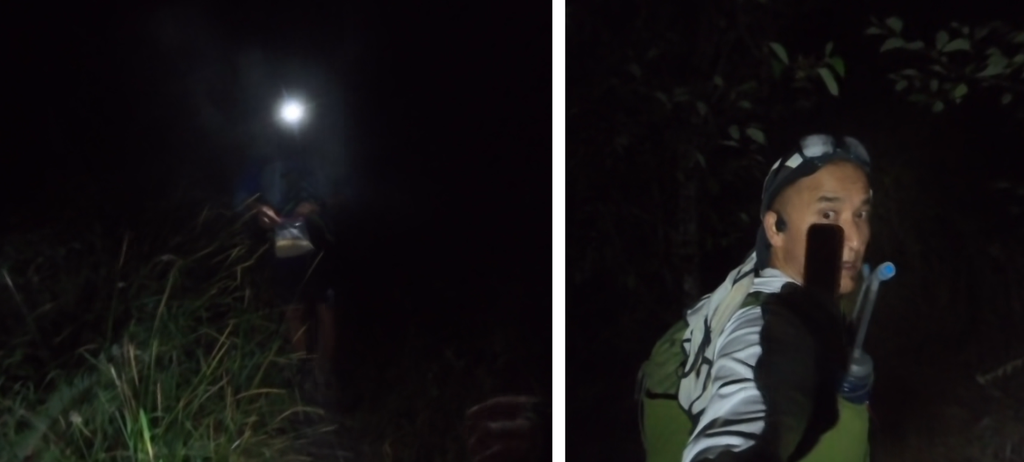
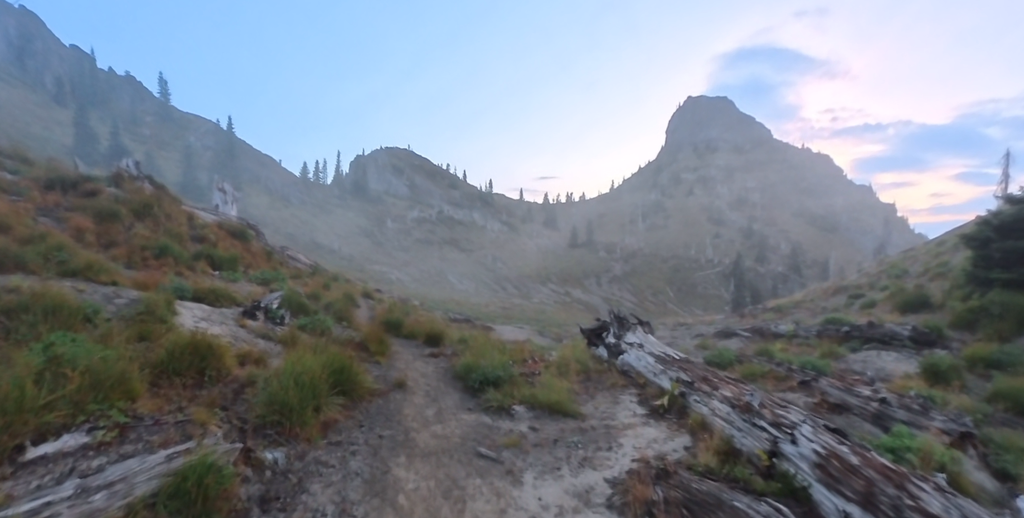
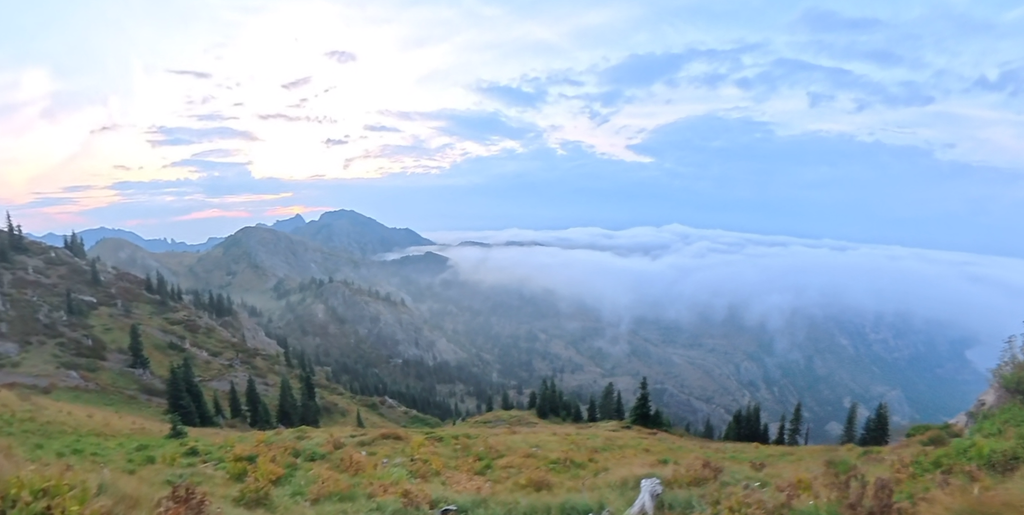
The next ten miles ran smoother, though the gorge dropping away on our right kept us honest. There’s something strange about night running — not being able to see how deep or how tall the terrain around you really is can be a mercy. Sometimes it’s better not to know.
Day 2 (08/15/2026): The Stomach Rebellion
Aid Stations: Norway Pass / Elk Pass / RD 9327
Mt. Margaret
The nightmare started around 6:40 am. Heading down the trail, I heard a voice behind me — a runner who’d been leading me the entire way, now somehow at my back. He told me we had an out-and-back ahead: we had to summit Mt. Margaret. It wasn’t a long climb, but partway up, my stomach gave out on me without warning. That sick, familiar feeling rose up fast. I fought it for two minutes before I gave in, sat down, and vomited. It was the last thing I wanted, but there was no negotiating with it.
Three or four minutes later, once my body settled, I pulled myself back up and pushed to the summit. Six miles still stood between me and the next aid station.
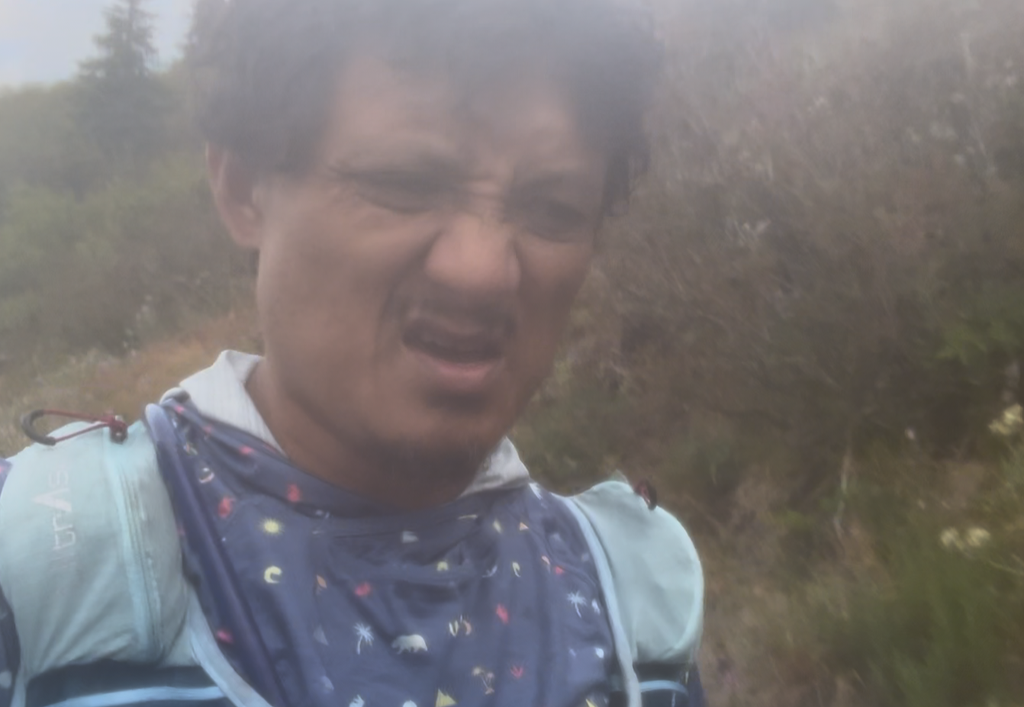
Even after difficult time, I was able to take a snap with a smile
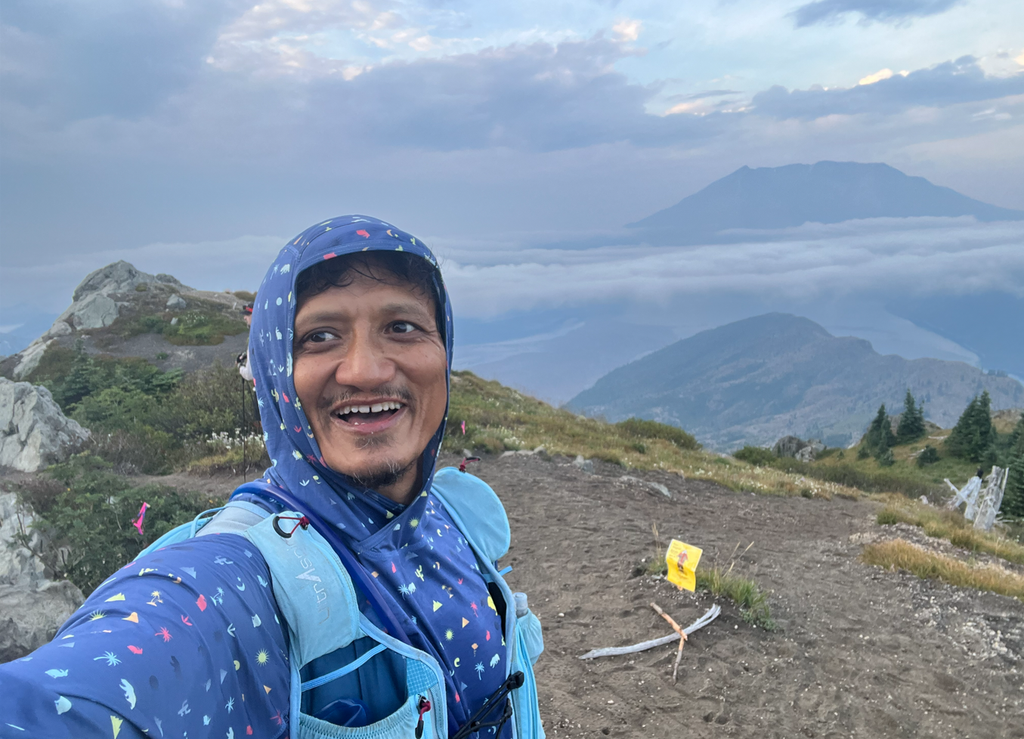
By then I was about ten minutes ahead of Govinda, with two runners between us. Determined that he make the summit too — missing it meant disqualification — I called him, and to my shock, the phone actually had a signal out there. I stayed on until I knew he was climbing. That one call felt like a small miracle.
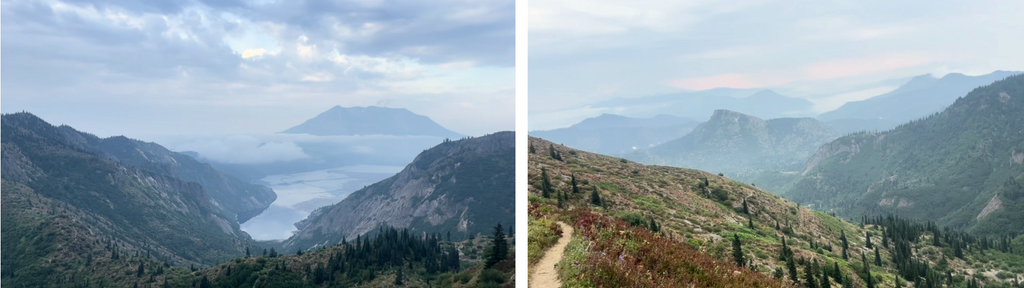
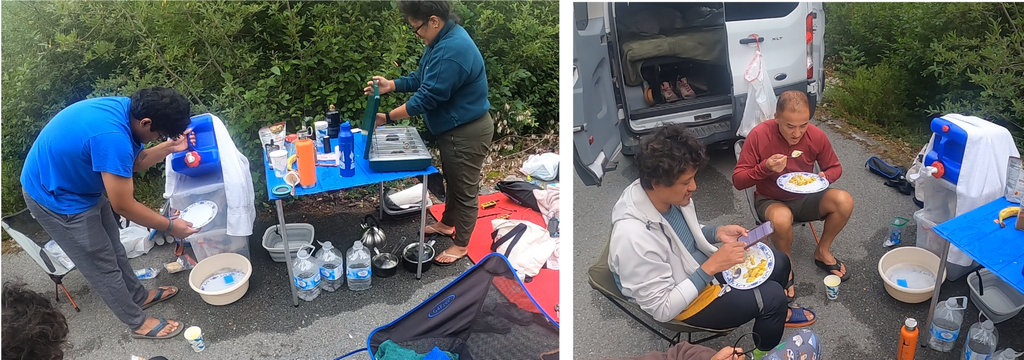
Six miles and roughly three hours later, we limped into Norway Pass, straight into the arms of my kids. Seeing them was pure relief. I downed two glasses of ice-cold ginger ale to settle my stomach, changed my gear, and crawled into the RV to sleep while the kids got our best meal of the trip ready. Sleep wouldn’t come, though — after 30 minutes of lying there, I gave up and got back up. Sali, Sanir, and Rayna refilled our flasks and packed snacks for the next stretch, while Ranish fed us rice and aloo, the comfort food that felt like home. By the time I reached this aid station, I’d already climbed more than 14,400 feet — 5,105 of it on this segment alone, against 3,909 feet of descent.
Crew were prepared. Thank you for yummy food
Elk Pass
After a little over two hours at the aid station, we pushed on toward Elk Pass — 11 miles, with 2,037 feet of climbing and 1,558 feet of descent. On paper, not much of a segment. But running with a voice in your head and a stomach in open revolt turns even a short day into an eternity. I walked as carefully as I could just to keep from throwing up again. That constant internal war wore me down until, for the first time, I let myself think the word quit.
Finally found out why Govinda stayed behind. He was taking trail nap. We need it 🙂
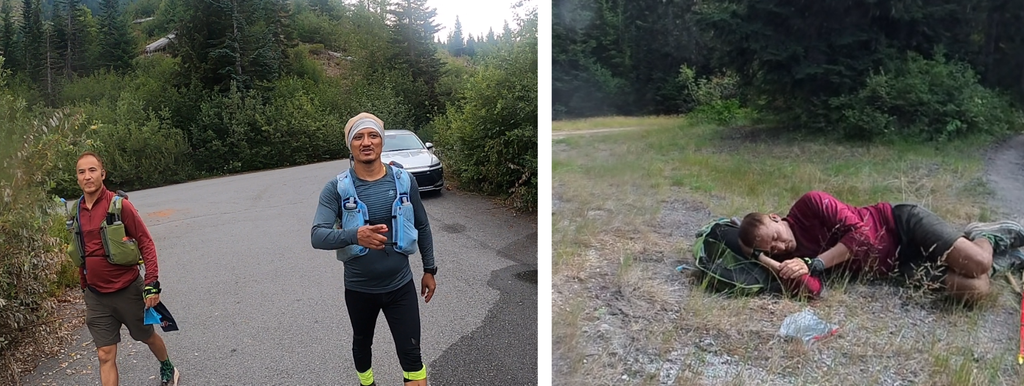
I was in deep pain and trouble. Couldn’t speak as it feels like everything was about to come out with violent force. This is where I started hearing evil voices
But everything I’d put into this — emotionally, physically, financially — and the thought of giving up in front of my kids stopped me cold. I wasn’t going to be the example of a quitter. So I kept pushing, hour after grinding hour, until about five hours in, I broke down in my kids’ arms and quietly sobbed. I couldn’t hold it in anymore. The pain was real, and so was the struggle. I lay down in the van for about 40 minutes, and slowly my nerves settled and my muscles let go. Then I put away two plates of rice and aloo with a Gatorade chaser, and it was like flipping a switch — I felt reloaded, ready for whatever RD 9327 had waiting.
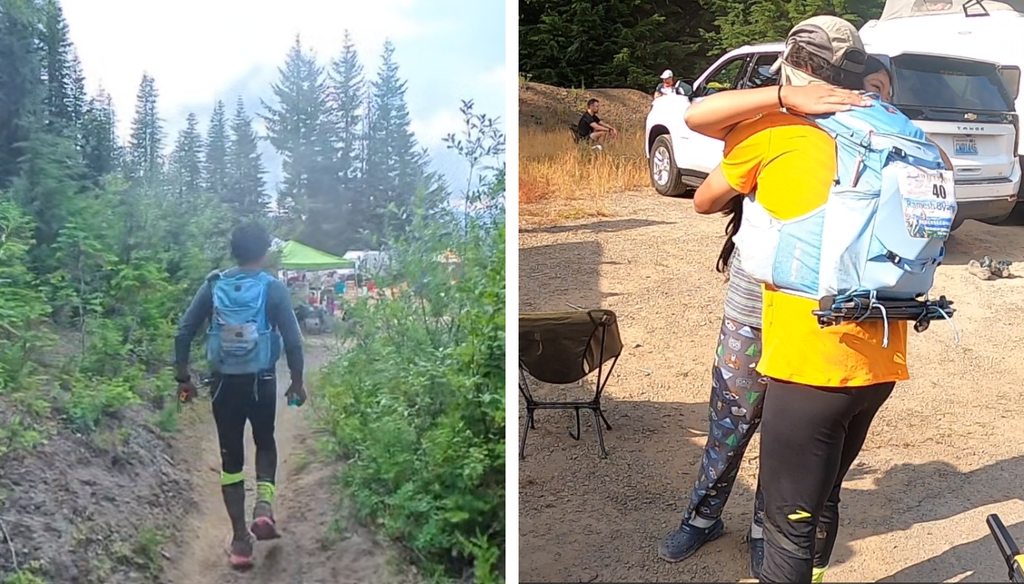
RD 9327
This segment was kinder than the ones before it — a string of small climbs and downhills that built toward one long descent. Six hours of wandering trail later, we reached the aid station, where I crashed for a full 60 minutes. It gave me a second life. I came out the other side feeling like a different person — my stomach had finally calmed, and I was able to actually hydrate and eat without a fight. Total for the segment: 2,543 feet of climbing, 3,144 feet of descent.
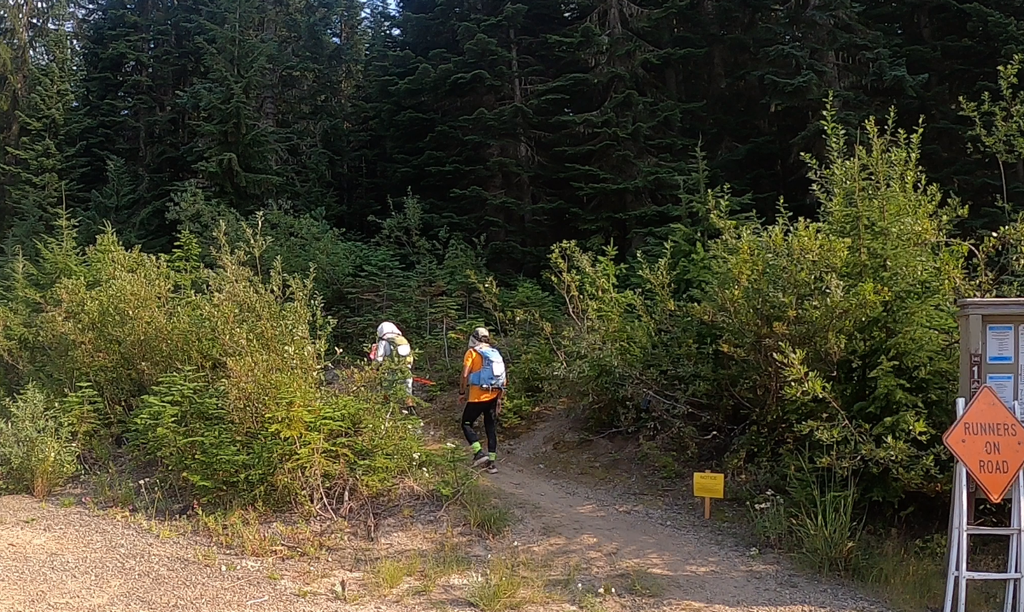
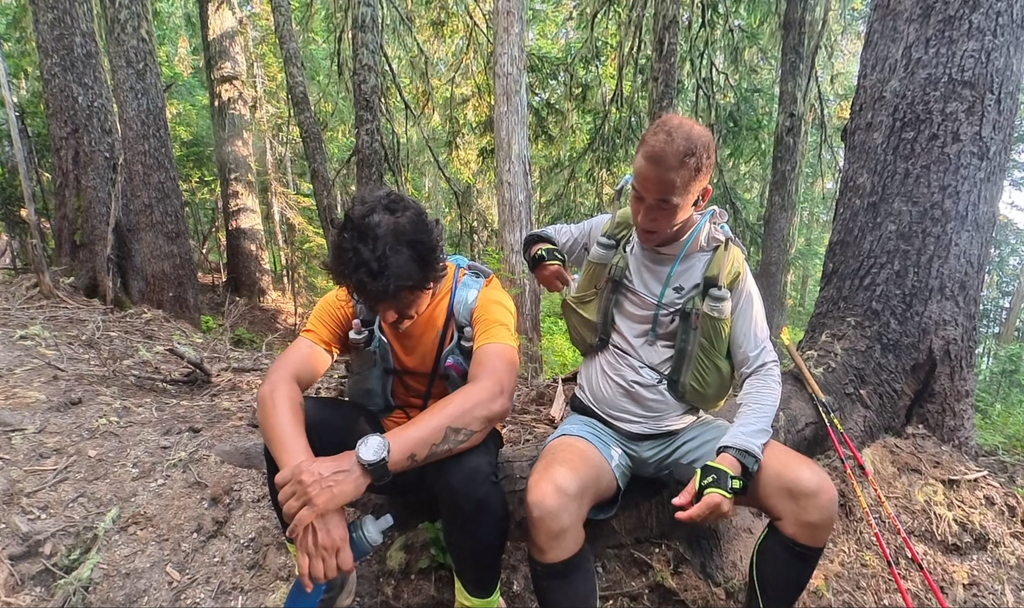
Two running brothers relaxing and chit chatting for few minutes
Got much needed 60 mins sleep and happy to be see family
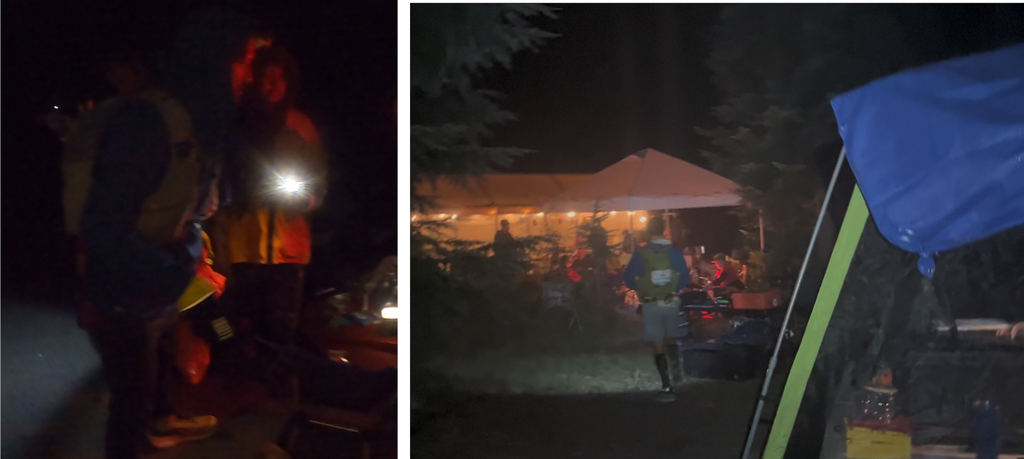
Day 3 (08/16/2026): The Never-Ending Climb
Spencer Butte / Lewis River / Quartz Ridge
The Slog to Spencer Butte
The stretch to Spencer Butte (11.6 miles) and on to Lewis River (7.6 miles) turned out to be the shortest ground we’d cover on this journey — though it didn’t feel that way at the time. The trail out of RD 9327 was a genuinely nice section, and we set off into it around 1:31 am. Six-plus hours of pushing through the dark later, we arrived at Spencer Butte, but not before the last three miles delivered a vertical climb that felt like it would never end — 2,817 feet up and 2,860 feet back down before we were through it, a slog I couldn’t wait to be finished with.
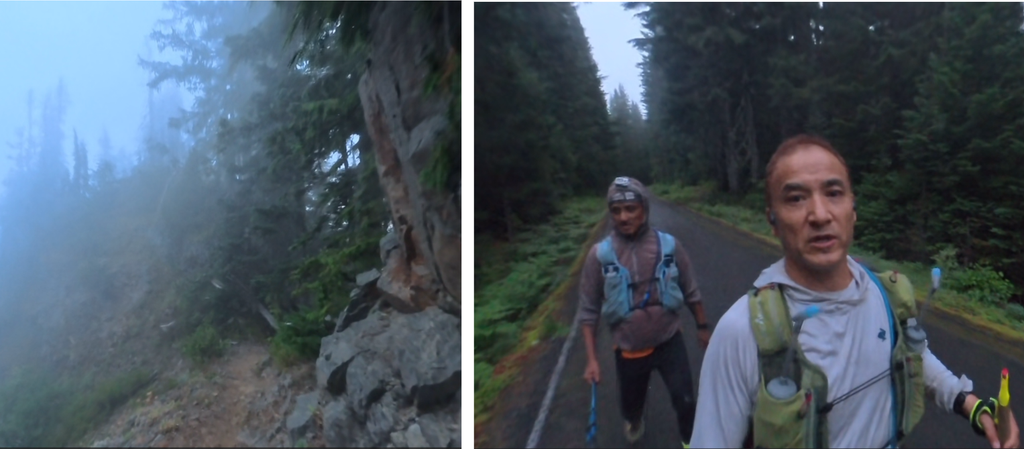
Along the way I found myself trading places with Becky, a strong runner working alongside her pacer — we leapfrogged each other for miles, each admiring the other’s grind. Spencer Butte didn’t allow crew access, so we relied on our drop bags there. I spent an hour loading up on scrambled eggs and hash browns before heading back out.
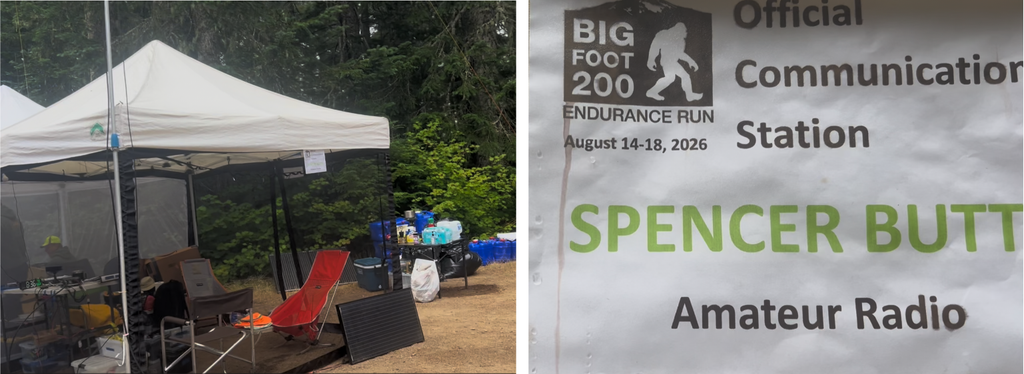
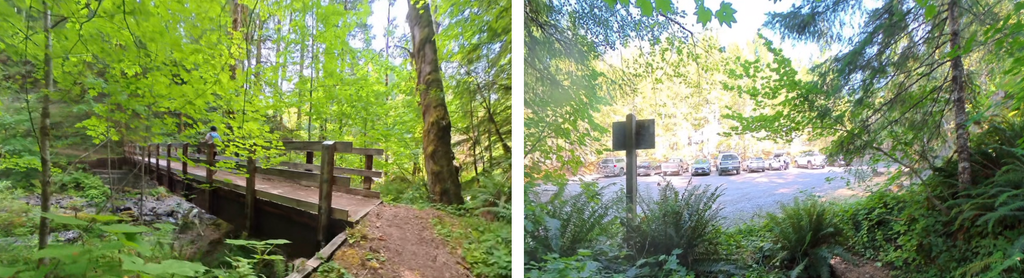
Along the Lewis River
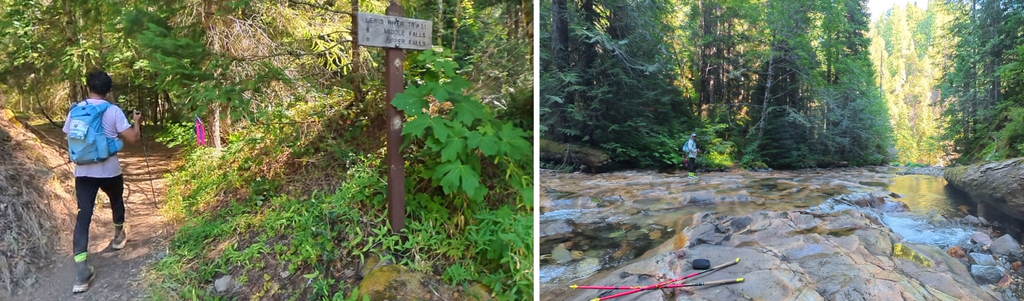
From Spencer Butte we dropped onto the blacktop for about four miles before the trail opened back up, this time tracing the banks of the Lewis River. We shared the path with hikers and other outdoor folks enjoying one of the more popular trails on the course. This is where I met Ben — originally from Pittsburgh, transplanted to Portland more than 20 years ago. We talked about family, sports, everything outside of ultra running, and it was exactly the distraction the pain needed. What stuck with me the most was learning he’d completed the entire Appalachian Trail — 2,198 miles — with his dog, in 5.5 months. An incredible feat, and one that left me genuinely inspired.
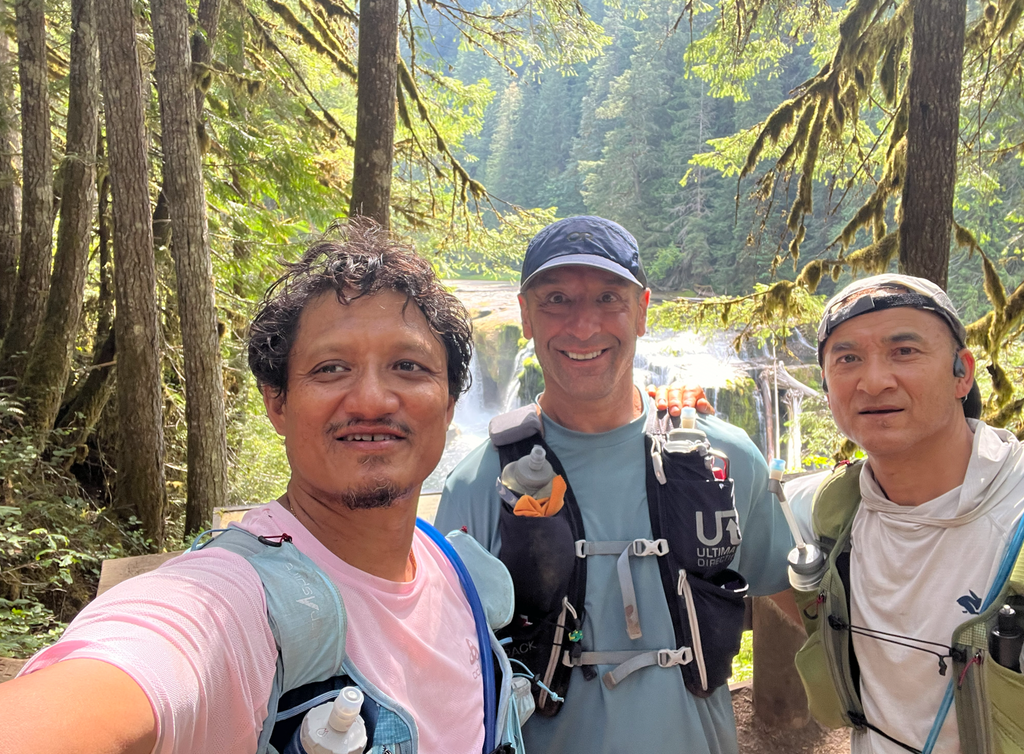
This is where Govinda pretended to be a marine biologist (a fish expert). He started describing various types of fishes to me 🙂
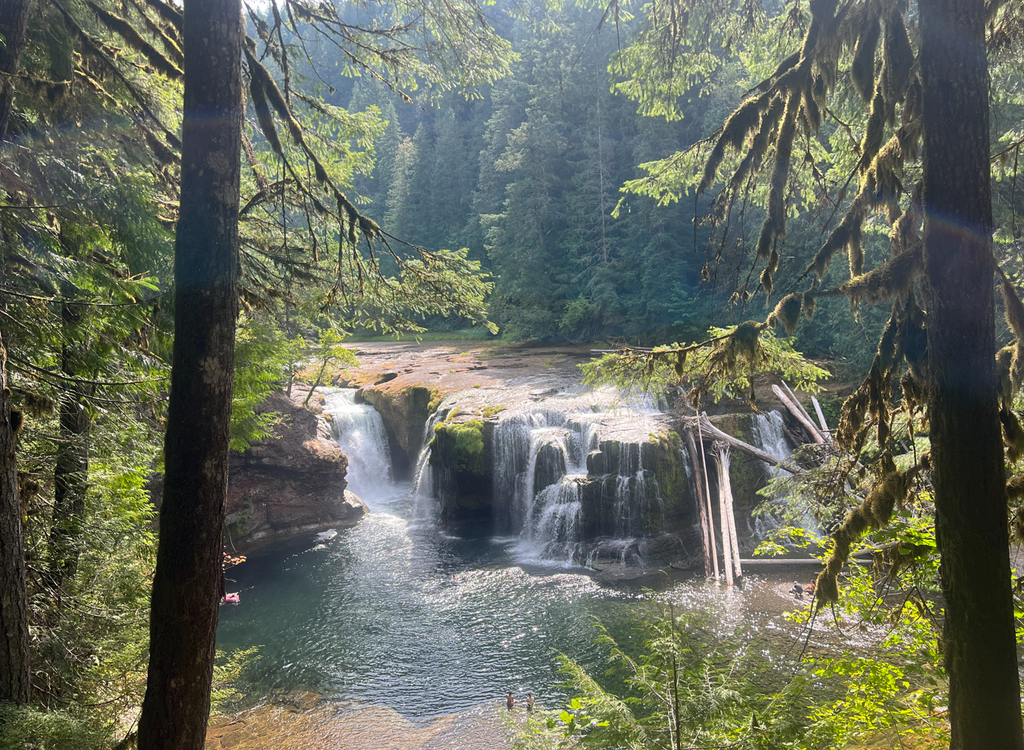
The river views and waterfalls carried us all the way to a parking lot, where a mile and a half of uphill blacktop delivered us into the Lewis River aid station to a chorus of cheering volunteers — 1,282 feet of ascent and 2,852 feet of descent behind us.
Patching Up and Pushing On
First order of business at the aid station: get my flasks and gear squared away for the next segment. The volunteers, including one sweet little girl, handed me warm pizza to refuel with. I did what had become routine by now — two or three cups of ice-cold ginger ale to reset my stomach. By this point, small blisters had started forming on both heels, and I made sure they got proper attention before heading back out. Govinda grabbed a 90-minute nap while I sat getting medical care. After more than 100 minutes at the aid station, we set off into what would be one of the toughest segments of the entire race: 17 miles with 7,300 feet of climbing ahead of us.
Stairway to Heaven


Quartz Ridge
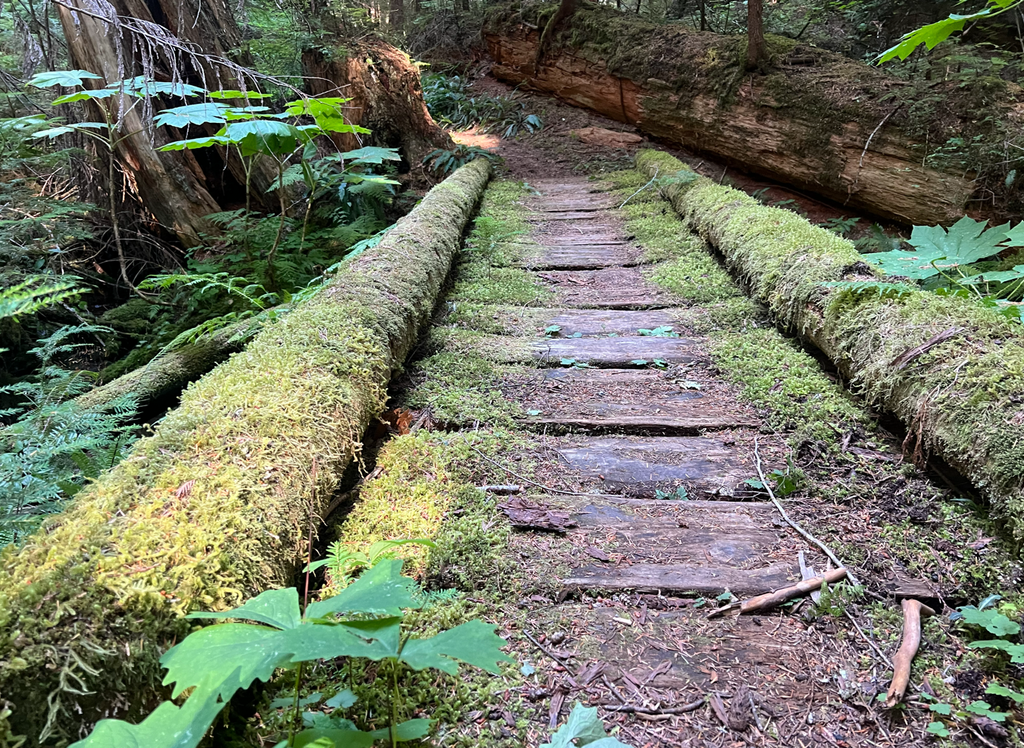
It started with a gentle grade, then turned brutal without warning — one steep pitch stacked on the next, grades pushing 20% for what felt like more than a mile straight up, with no letup in sight. It was the kind of climb that wears down your body and your resolve in equal measure, the kind that has you questioning why you signed up for any of this. Hours and hours of climbing later, we finally crested the mountain — only to find, to our absolute disgust, that three more miles of descent stood between us and the aid station. Grades of 15% to 30% over loose rock and roots made that downhill feel worse than everything we’d just climbed — steep, technical, and unforgiving. It took us over an hour to navigate it carefully.
Some trails were so steep we could see the sky when we climb. Some places we have to climb more than 1000 feets in 1 mile
At the bottom, our crew was waiting with open arms, fully locked in and ready with food and a plan for sleep. This is where I finally got a real 90 minutes of deep sleep — exactly what my body needed after everything my stomach had put me through. Total for the segment: 7,347 feet of ascent, 4,522 feet of descent.
It just melted my heart hearing Sanir and Rayna. Sometimes I feel guilty of putting my kids in this situation.
Out of Quartz Ridge
Day 4 (08/17/2026): Falling, Climbing, and Elk Peak’s Cliff
Chain of Lakes / Klickitat
Losing Focus
After our mandatory gear check and choking down two pancakes, Govinda and I headed back out along the same trail we’d descended the night before. Three miles of uphill hiking felt almost merciful compared to the downhills — climbing, at this point, was the easier ask. At the three-mile mark we veered right toward Chain of Lakes, 13 more miles ahead, mostly downhill but littered with loose rock and sand.
This is where I lost my focus, and it cost me. In the span of 200 to 300 meters, I fell three separate times. I hadn’t fallen once in over 100 hours of running, and suddenly I was down three times in a couple hundred yards — proof of exactly how thin the margin is when your concentration slips. The last fall caught my left knee. I could feel something wasn’t right, but I was relieved it didn’t feel serious.
We pushed on through a dirt road for about four miles, Mt. Adams rose in the background, running alongside Becky, a local runner from Washington State, before cutting back onto trail for two more miles of gentle climbing that brought us into Chain of Lakes aid station — 3,846 feet of ascent and 4,015 feet of descent behind us for the segment.
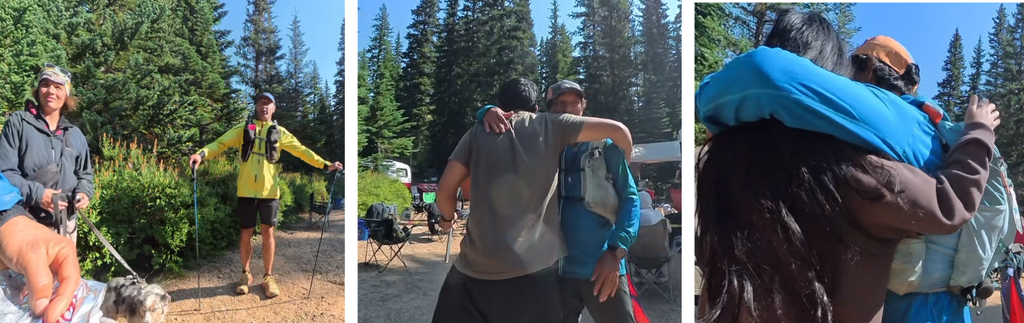
Waiting there, to our surprise, was Jerrian (our medic from AZ Monster) and Carolyn, someone we’d shared long stretches of trail with at AZ Monster and crossed that finish line together with. We’d helped pace her through several segments back then since she’d been running solo. Now she was working as a medical volunteer, and she took care of my foot herself. Seeing her felt like a gift.
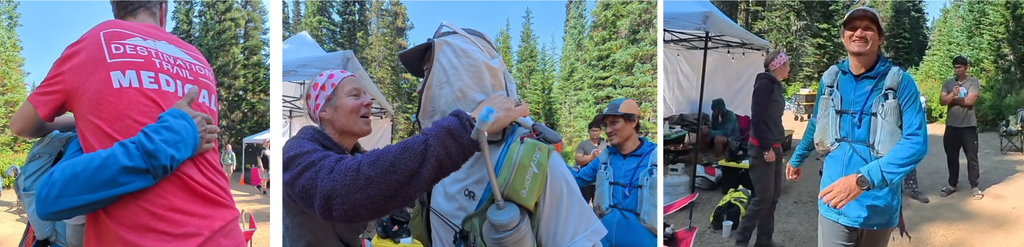
We downed ice-cold ginger ale and veggie burgers while we waited on our crew, who showed up about 15 minutes later. Sanir and Rayna walked us back to the crew parking lot, where rice, aloo, and pasta were waiting, along with the sight of my kids — which never got old. After about 90 minutes of resting, refueling flasks, gear, and nutrition, we hugged everyone and disappeared back into the trail. Carolyn had told us to move quickly if we weren’t planning to sleep. We’d understand exactly why soon enough.
The Knee
The first two or three miles out were a steep descent, and I found myself running it carefully — my left knee had started aching from the earlier fall, likely a mild hyperextension. It didn’t bother me on the climbs, only the downhills, which was its own kind of frustrating given how much descending still lay ahead. I took an ibuprofen, an electrolyte tablet, and washed it all down with Gatorade.
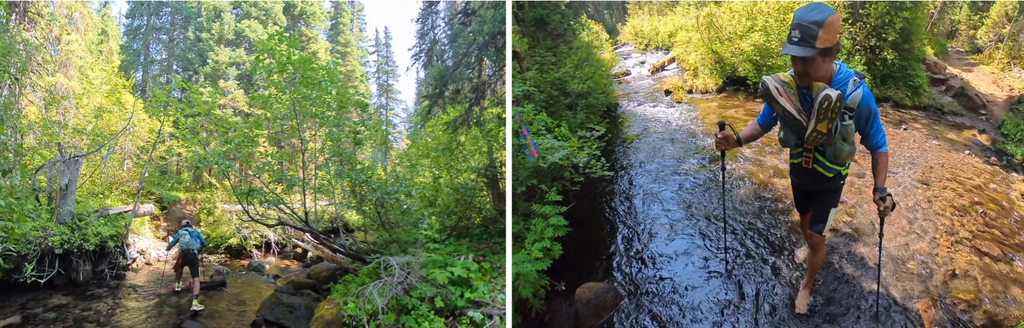
We crossed several streams over a seven-mile stretch of jogging trail before dropping two more miles, where we met two runners — one from South Africa, one from Ecuador. The South African runner gently reminded me to keep track of my electrolyte packs; normally I’m careful about leaving no trace on trail, and I apologized, figuring one must have slipped from my drop bag unnoticed. Govinda and I make a point of picking up trash wherever we find it — after all this time on trails, you learn to respect them.
Elk Peak
After crossing a large river and running another two miles, the real monster of the day was waiting: roughly 3,000 feet of climbing packed into four and a half miles, steep and seemingly endless. What surprised me most was that neither of us stopped — we just kept moving, one foot at a time. Every gust of wind sounded like it was carrying the aid station closer, but it was a mirage each time. We kept climbing anyway. Along the way we passed the two runners from earlier, and Govinda told me they’d complimented us as strong climbers.
Mt. Adams
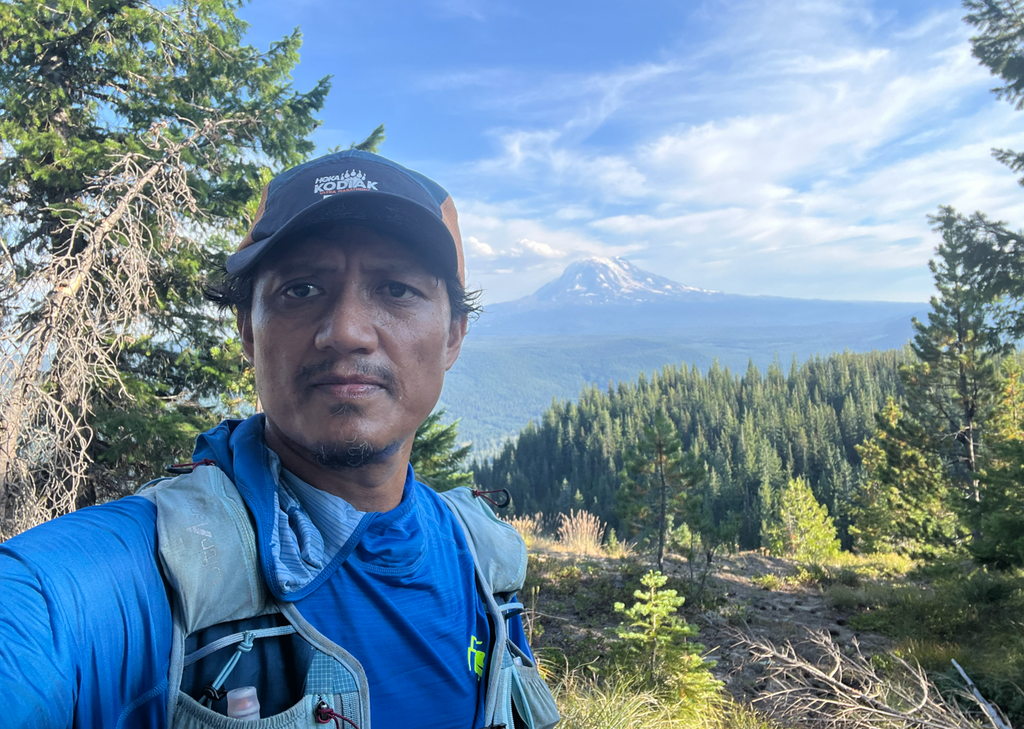
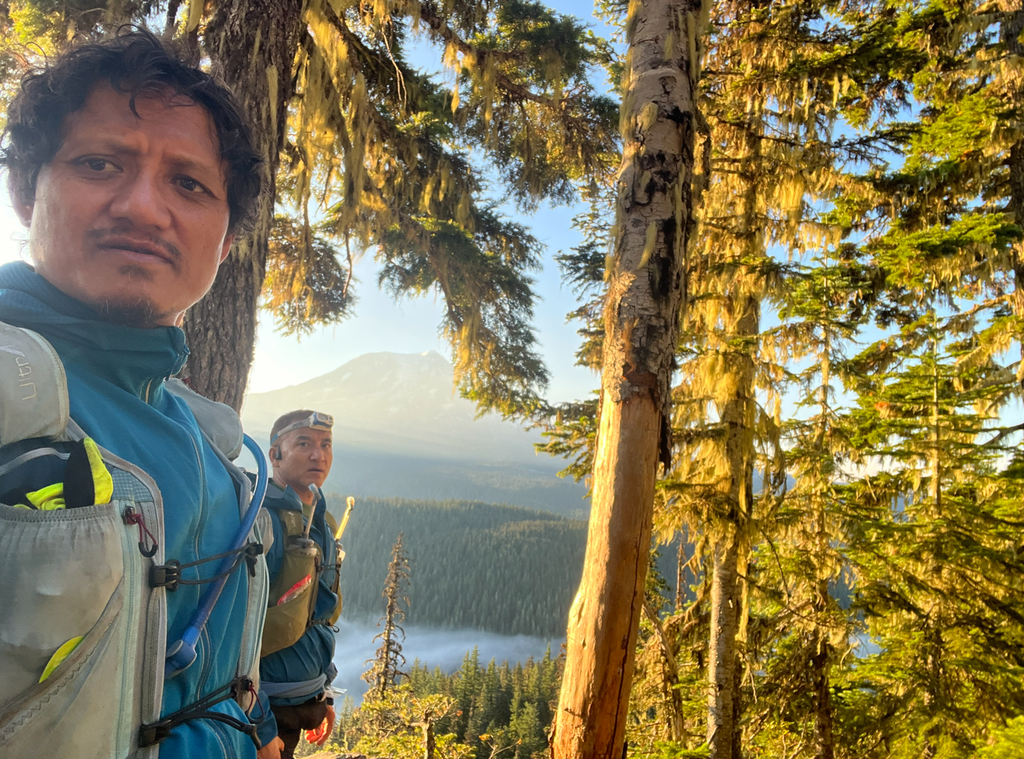
We knew Elk Peak was still ahead — another 500 feet of steep climbing with no real trail, just loose rock and sand clinging to a cliff face. After 150 miles and only three or four hours of sleep total, it was genuinely intimidating. Strangely, the climb up felt more comforting than what was coming down. We ran into Becky again near the top and took a few photos with Mt. Adams behind us before starting the descent.
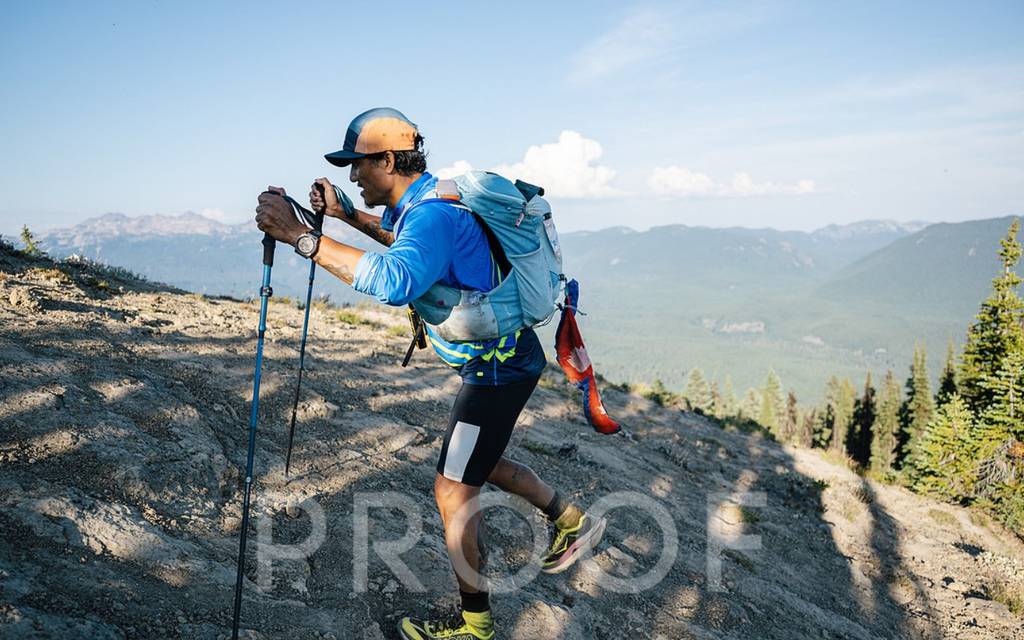
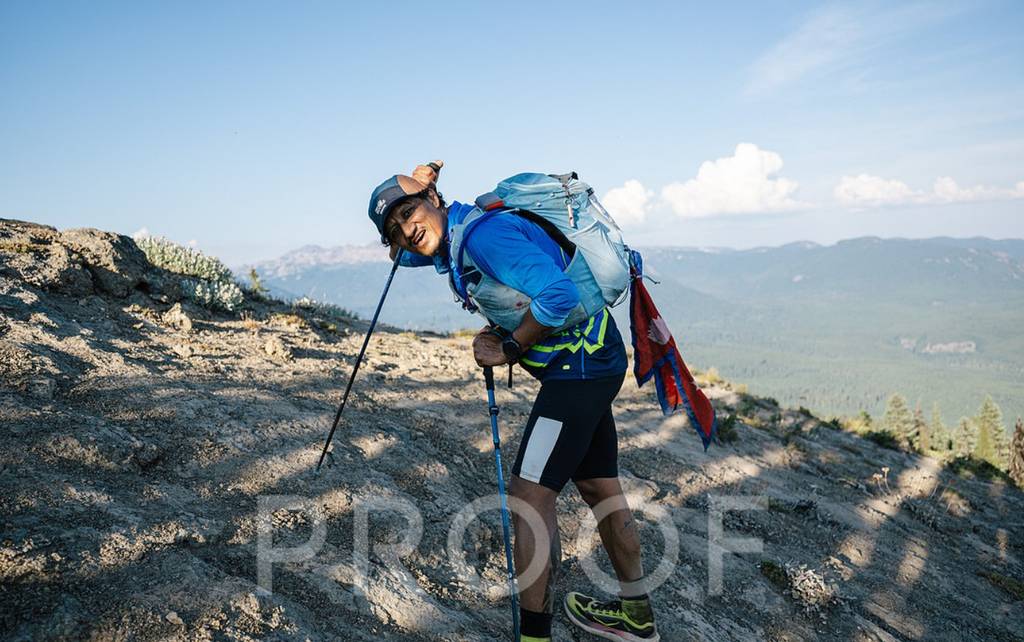
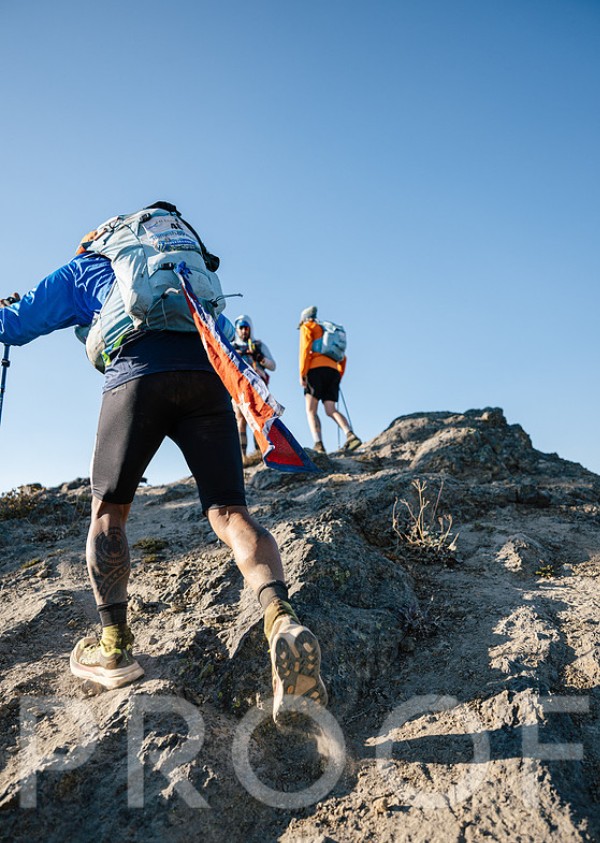
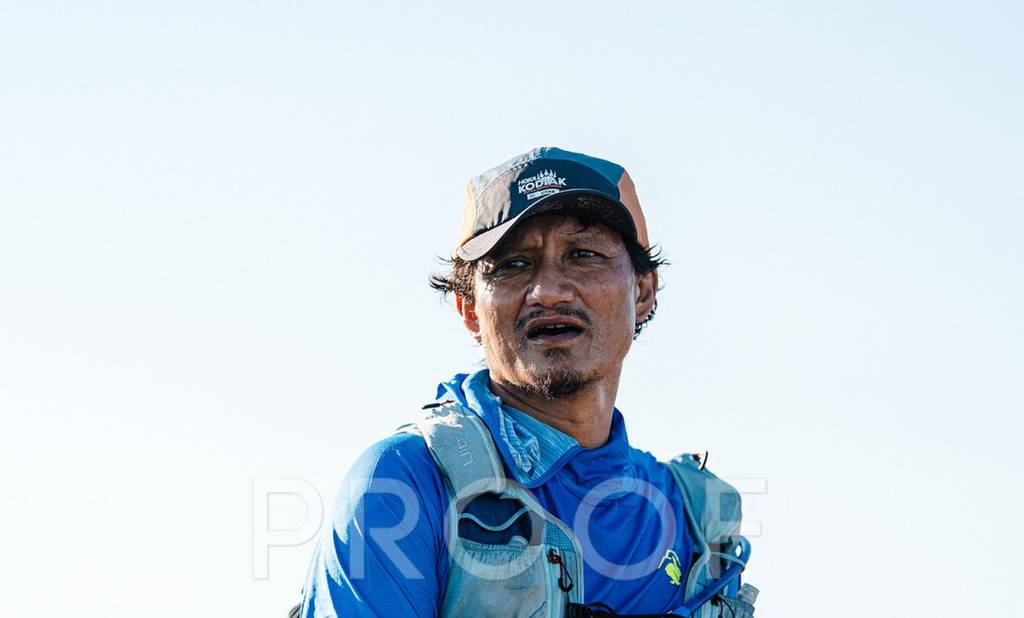
Becky and Helgi flew down that section — gone in minutes, like they had nothing to lose. It took me more than five minutes just to pick my way down, locked in on planting one foot at a time. After a mile and a half of steep downhill, we reached Klickitat aid station, where Sanir, Rayna, Sali, and Ranish were waiting. We refilled flasks, drank down whatever cold fluids we could get, and loaded up on nutrition. I noticed Becky nearby, lying on the floor while her friend looked after her. Segment total: 3,927 feet of ascent, 3,900 feet of descent.
Day 5 (08/18/2026): The Final Push
Twin Sisters / Owens Creek / White Pass HS (Finish Line)
A Steep Climb in the Dark, and Becky Returns
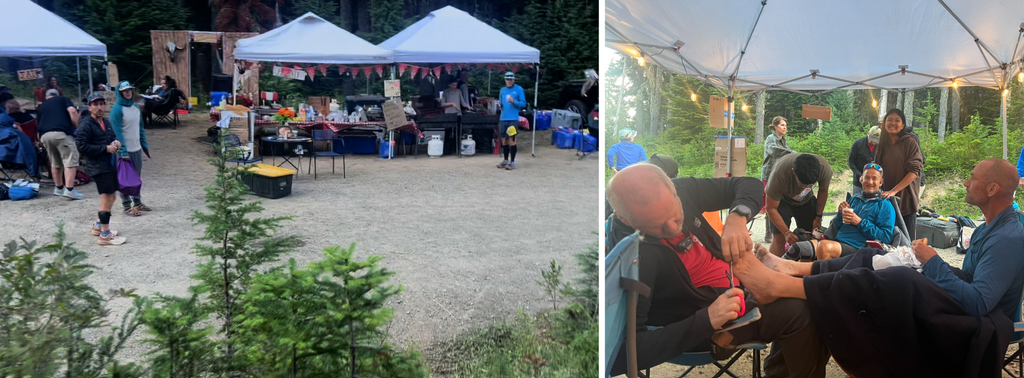
After about 40 minutes at Klickitat, we set off toward the next aid station, Twin Sisters, right around 8 pm. We took a few silly photos with the crew before the dark trail swallowed us up. It was getting cold fast. Since this stretch would be run entirely at night, Becky asked if she could join us, and we were more than happy to have her back.
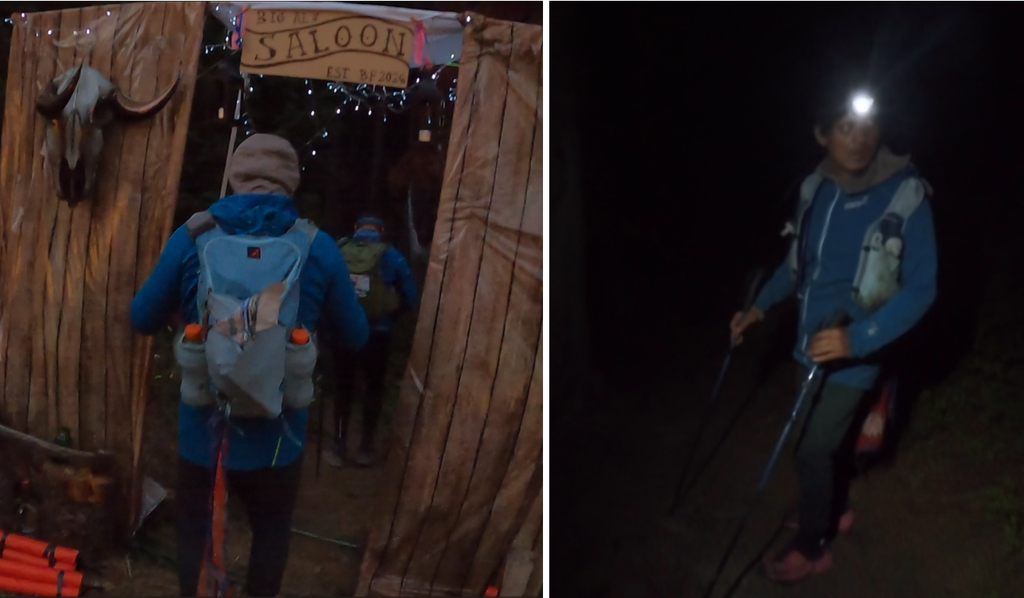
About a mile into the climb, sleep deprivation started catching up with her. I kept my pace steady rather than pushing hard — the climb itself was brutal enough, 1,000 feet in a single mile. I could hear her wheezing behind me, breathing labored. She asked for a 20-minute nap, promising she’d be fine after, and Govinda took the chance to close his eyes too while I sat still and let my body rest. It still haunts me when she says to us ‘Please do not leave me’. We would never leave her alone. I know Ultra Marathon is an individual sport, but there is humanity and compassion in this sport. We do not leave one of our comrades behind, unless they are in a good spot and will be helped and rescued. Twenty minutes later I woke her, made sure she was okay, and we pushed on. Four more steep climbs still stood between us and Twin Sisters. Becky hung with us through three of the smaller ones, her breathing cutting through the dark, quiet night.
About five miles in, midway up the longest climb of the segment — a full mile straight up to Mission Mountain — I heard her groaning, coughing, then vomiting. She was in bad shape. Govinda and I didn’t know what to do — push on, or wait it out with her. Even sick as she was, she kept apologizing for slowing us down. We stayed with her for about 15 minutes, got her settled on flatter ground, and told her sometimes 30 or 40 minutes of real rest is what resets the whole system. She asked us to forge ahead. She will take 15-20 mins more break and will try with other runners behind us. Reluctantly, we left her behind and pushed on for another 10 or 15 minutes ourselves.
The Cliff
The climb was so steep that looking straight up the trail, I could see the open stary night sky. We finally crested the ridge — and the trail simply vanished. That’s the last thing you want to see in the middle of the night. Between our GPX and pure instinct, we felt our way across the face of the ridge until we found the trail again.
What came next was pure horror: a 200-foot descent down a cliff with no real trail underfoot. Steep enough that one wrong step would end the race, or worse. I kept repeating the same mantra to myself — focus, Ramesh, focus — planting each foot, then each trekking pole, with total deliberateness. After passing that dangerous stretch and walking for about 2 hours, I heard runners approaching, three of them, and to my genuine delight, one was Becky, now tagging along with a couple from New Hampshire. Seeing her back on her feet was one of the best moments of the whole night. Sometimes all you need is a break before the next push — where there’s a will, there’s a way. We talked briefly before passing her again. One of the runners, Helgi, told her that she was more than halfway there. That small pep talk sprang her to life and she kept pushing forward.
Not long after, fatigue caught up with me and I took a hard fall — right knee, left elbow. I got up gingerly, shook off the sting, and kept moving, though I lost one of my water flasks in the process. We finally made it back to the real trail and descended toward Jackpot Lake, where another steep 1,000-foot climb in under a mile was waiting. Runners coming back from Twin Sisters started passing us the other direction. After 2.7 miles jogging a narrow trail littered with fallen trees, we reached Twin Sisters aid station around 6:35 am.
Twin Sisters and the summit to Pompey Peak
The cutoff there was 9:30 am, and we’d rolled in with three hours to spare — enough cushion that Govinda and I let ourselves relax before the final push. I put away two pancakes and two cups of coffee, changed gear, refilled flasks, and we left around 8:45 am for the 13 miles to Owens Creek — a segment that would total 4,919 feet of climbing and 4,987 feet of descent.
We climbed 2.7 miles before veering left onto the Klickitat/No. 7 trail, a genuinely beautiful stretch with sweeping ridge views, mostly downhill until we reached Pompey Peak — one of the mandatory out-and-back points on the course, and I was grateful it was built that way. Fifteen minutes of climbing brought us to the peak, and the view that greeted us was worth every step: Mt. Rainier standing open-armed under a clean blue sky.
This is where I called the most important person in my life — Anju. Service finally reached us, and I got to FaceTime her right there on the peak. It made my entire day, and after that call, nothing was going to stop me from finishing. She told us not to linger too long and to keep moving toward the next aid station, so we did, descending about two miles and hopping over fallen trees along the way.
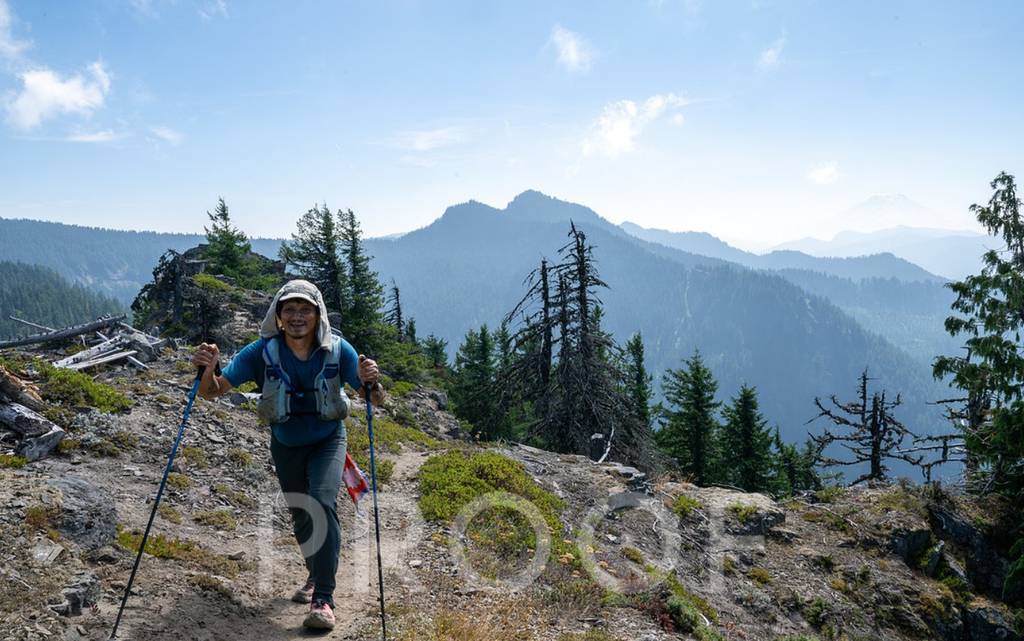
Talking to love of my life, Anju after 4 days. Seems like eternity
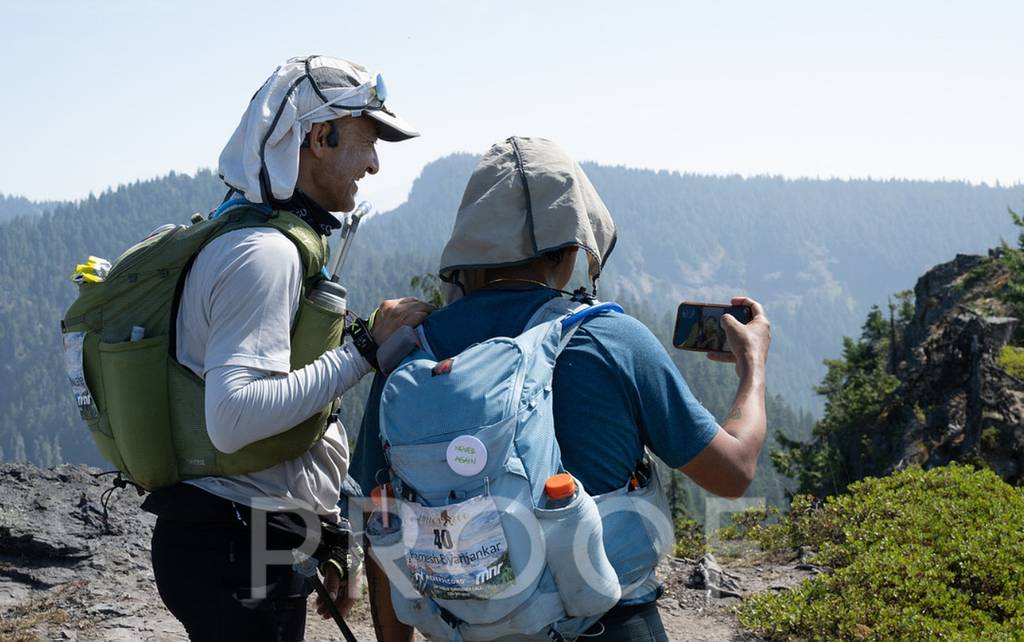
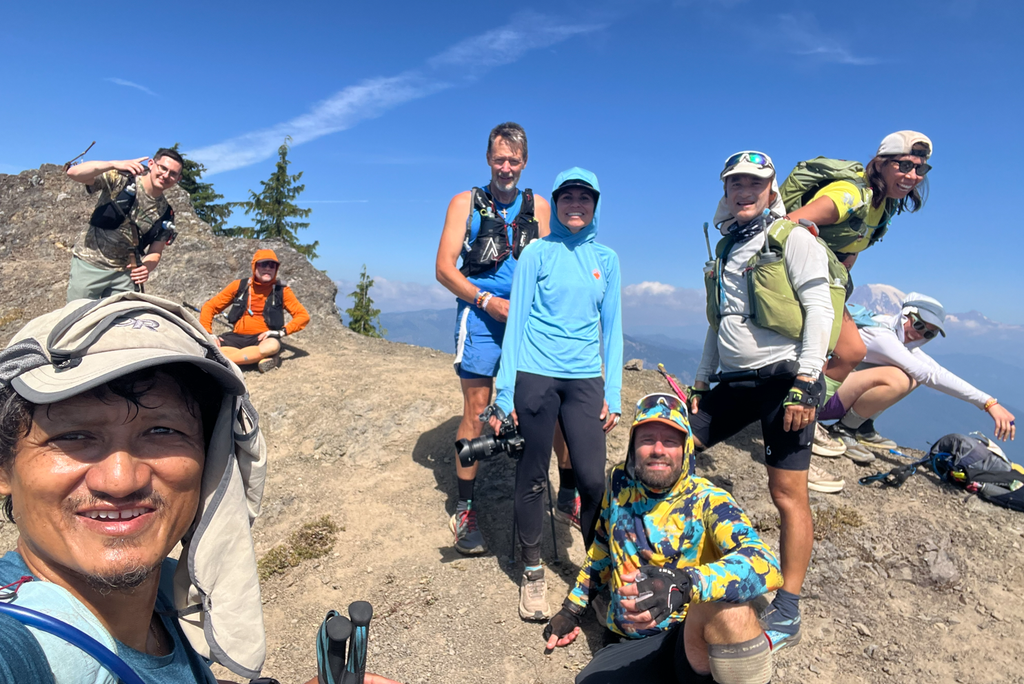
One of the best picture and moment. With the fellow runners and Esther (amazing volunteer and photographer)
The Green Tunnel
Next came a section called the Green Tunnel — a wide trail buried in overgrown bushes and shrubs, entirely downhill for about six miles until Owens Creek. We grabbed some solid food and gels and started jogging, grateful for once to be running downhill on mostly flat ground. Along the way we met Danny from Texas, who joined us the rest of the way to Owens Creek.
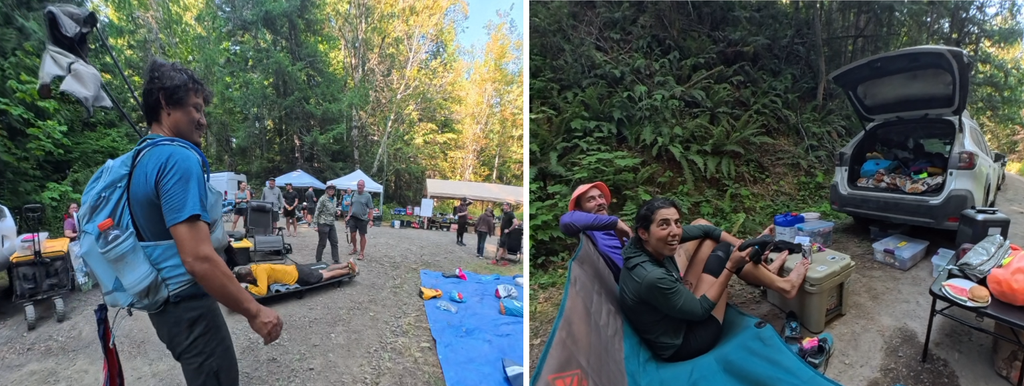
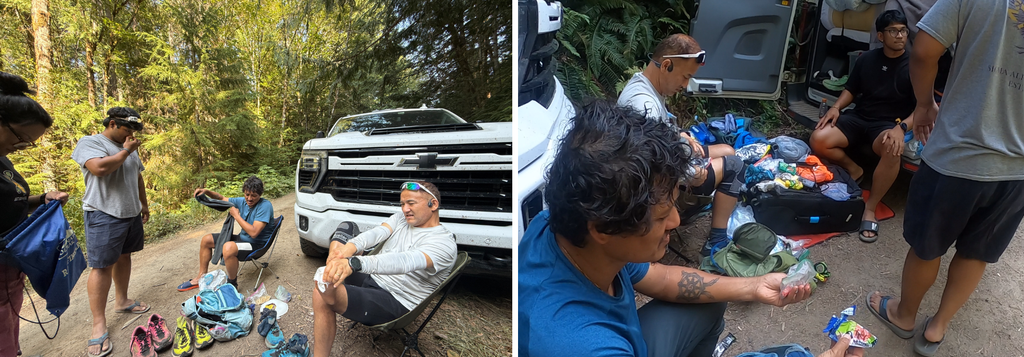
For a brief, tense stretch, our Garmin and satellite transmitter stopped agreeing with each other, and it rattled us — my phone’s GPX told me we were close, but the transmitter showed us far behind, projecting a finish around 7:30 pm. We trusted the GPX and kept moving, reaching the final aid station around 3:58 pm. We spent about 50 minutes there with our crew, relaxed for the first time knowing we’d cross the finish line before dark. Eleven miles stood between us and the end.
The Final Mile
We swapped into light clothes and shorts, stripped everything unnecessary out of our packs — no more gear, no more extra nutrition, just the will to run light — and headed out down a mile of dirt road before turning left onto blacktop. Seeing pavement under our feet again felt like a small mercy. Govinda and I settled into a 13-to-14-minute pace and started running.
We caught up to Danny again, spent about a mile alongside him and his pacer and heard some enthralling stories of his Moab 240 journey, then kept moving until we crossed paths with Becky and her crew. A few words exchanged, and we pushed on. Then I spotted a drone circling overhead, and I knew — my kids were close. Around the same time, Randi and her pacer caught up to us, and we fell into stride together.
With about a mile left, my left leg finally gave out on the running front, and I had to switch to walking — fast walking. After a mile and a half like that, we turned right toward Randle High School and the track that would carry us to the finish line.
The Finish
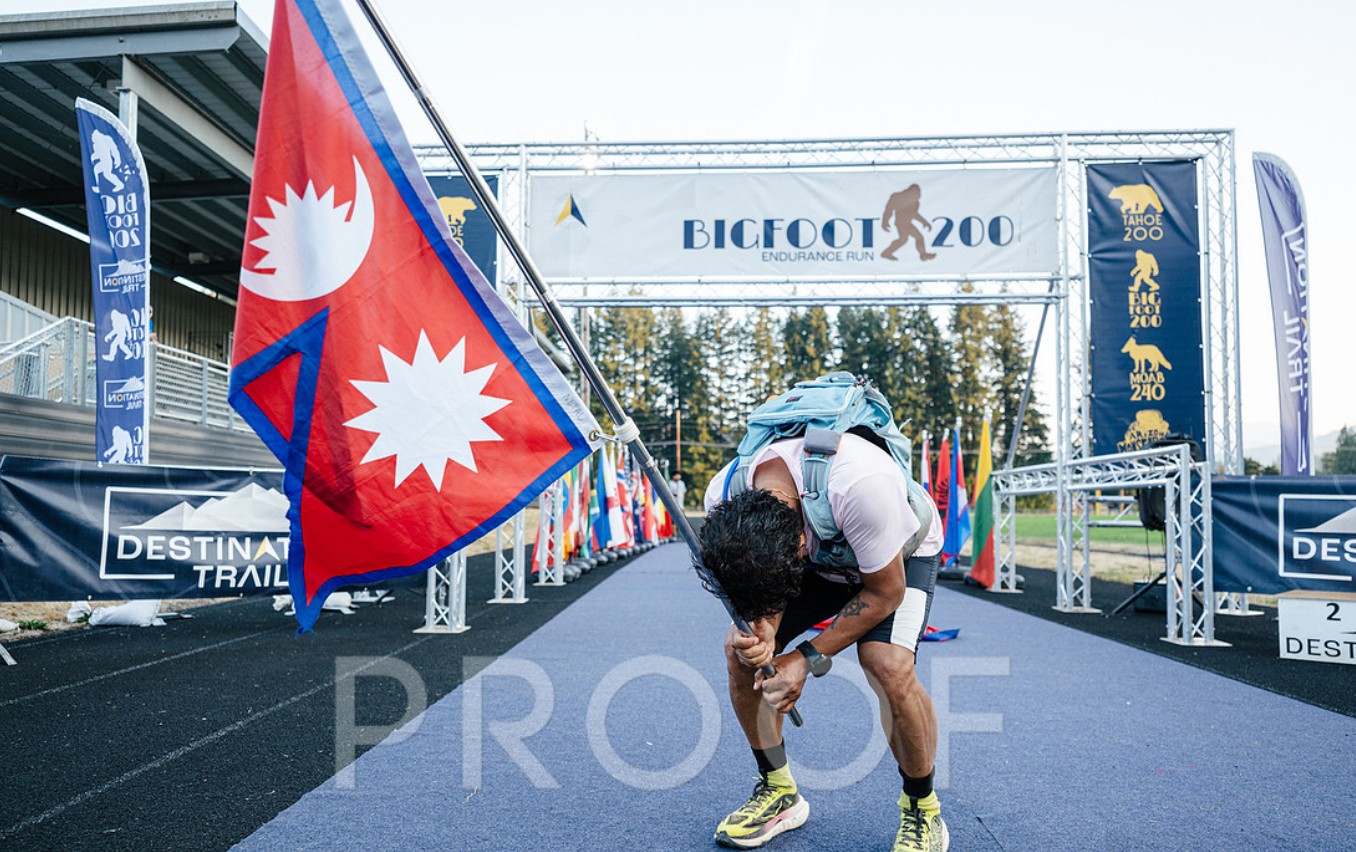
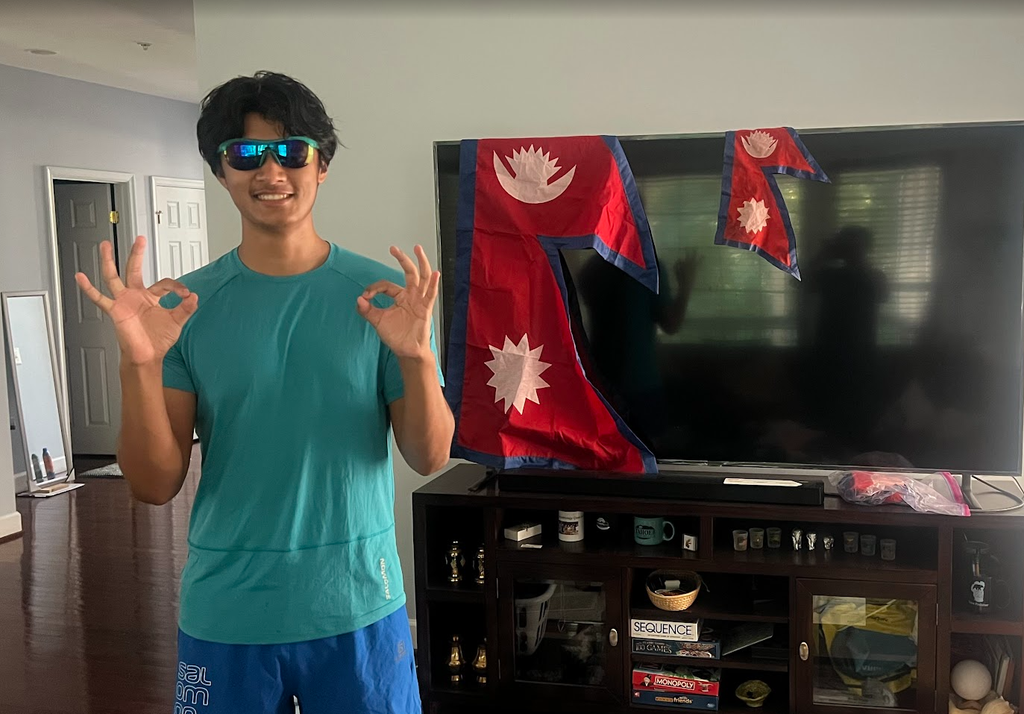
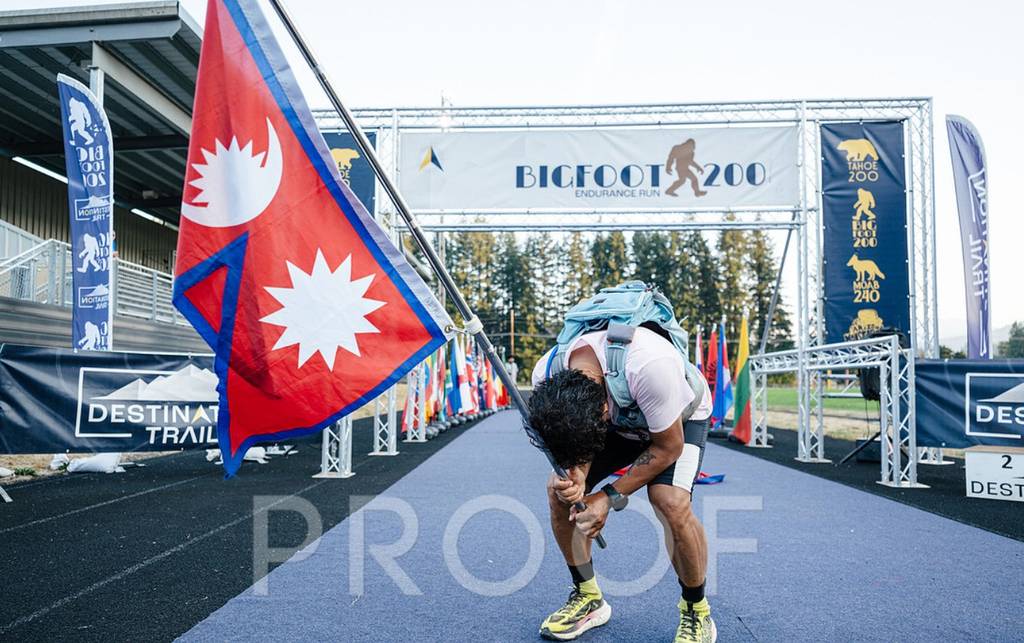
By then, goosebumps had taken over and the emotion was rising fast. We jogged the final 300 meters and crossed the finish line together, the Nepali flag held high above us. Something broke loose in me — a primal scream of pure release, and I dropped to my knees. Two hundred miles and 103-plus hours, and I had finally beaten the demon that had gotten the better of me before. That was the real victory.
What made it complete was running that last stretch with my kids beside me — because this finish belonged to them as much as it belonged to me. I pulled Rayna, Sali, Ranish, and Sanir into the tightest hugs I had left in me. They already know what they mean to me — they watched every high and every low of this race and never once let me quit. The thing I’ll carry the longest from this whole experience isn’t the finish line itself, it’s watching these kids grow into the people who carried equal weight in this success. This race isn’t mine. It’s ours.
Best part of the race, running the finish line with Rayna
Thank you my kiddos. The success belongs to you all. I am just a runner
Finish line from another angle

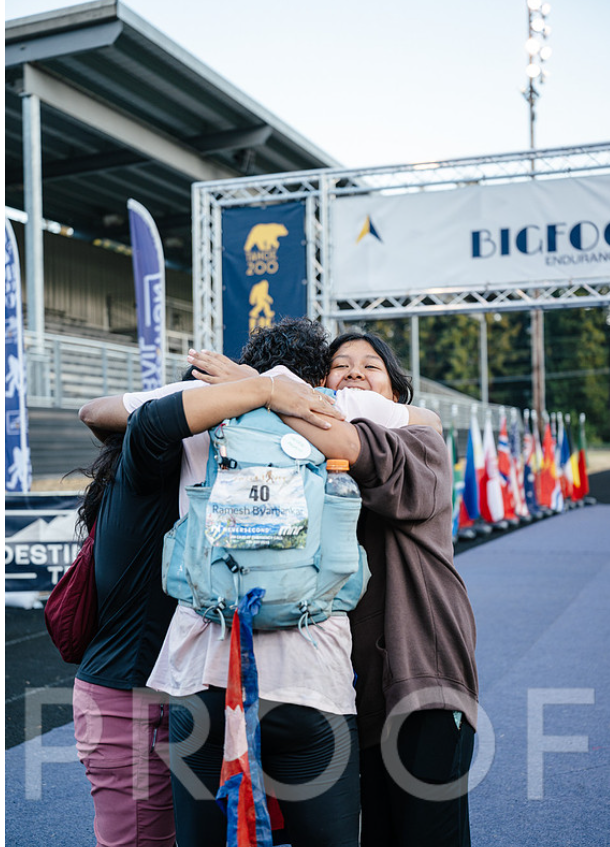

I was equally overwhelmed thinking of the people who couldn’t be there in person — my wife Anju and my son Aatish, the bedrock under everything I do. And this race never happens at all without the constant love of my sister Rammaya, my brother-in-law Sanu, my niece Roli and her husband Spencer, and Pat. Every text message mattered more than I can say. I read them whenever I got the chance out there, and every single one helped push me forward.
To My Family Back Home
And finally, to my mom and dad, my brothers Dinesh and Sahadev, and every member of my family and friends — I wanted so badly to talk to you all out there, but there was no service to reach you. Know that I talked to you anyway, in my heart, in my mind, every mile of the way.
The Verdict: Best Chief Crew
So, the suspense is finally over. The truth is, there is no single best chief crew — there are two. While Sanir and Rayna earned their stripes as our interns in this race, Sali and Ranish share the title of Chief Crew, and honestly, it wouldn’t be fair to split them apart. They complement each other too well to separate. Ranish is the one who takes a complicated tangle of tasks and breaks it down, delegates it, and gets it executed without missing a beat. Sali is the calm before the storm — she’s the one who knows exactly what needs to happen next, asks the right questions at the right time, and knows when to slow the pace down so nothing critical slips through the cracks.
Together, they’re my crew chiefs. The only ones missing from this crew of incredible people are my niece Roli and her husband Spencer.
I love you all.
A Huge Thanks to Volunteers, Organizers and fellow runners
A huge thanks to the volunteers who staffed aid stations around the clock — patching blisters, checking gear in the dark, and keeping us moving when we had nothing left. Special thanks to Carolyn for tending to my foot at Chain of Lakes. To Destination Trail, thank you for building and safely running a course this wild, and to the volunteer photographers who captured it all along the way. And to the fellow runners, pacers, and families we crossed paths with — Becky, Ben, Danny, Randi, Sally, Helgi, Tony and so many other runners — thank you for the miles, the stories, and the reminder that even a solo sport isn’t run alone.
Race Stats
Elevation Gain — 44,082 ft
- 1.5x Mount Everest (29,032 ft) — then another 15,000 ft on top
- Nearly 4x an Everest Base Camp-to-summit push (11,432 ft)
- ~2.3x the entire Annapurna Circuit’s gain — done in 4 days
- ~30 Empire State Buildings stacked
- ~9 Half Dome cable climbs
- ~6 Grand Teton summits
Elevation Descent — 45,563 ft
- More than Everest’s full summit-to-sea-level descent, with 16,500+ ft still left over
- ~9.5 rim-to-river Grand Canyon descents
- Net drop of 1,481 ft — matching the course’s real elevation loss from Marble Mountain to White Pass
The Pack — Avg 22.5 lbs, 200 miles
- ~4,660 lb-miles of hauled weight — 2.3 ton-miles of pure load work
- Cost an extra ~330 kcal just to lift uphill, on top of body weight and distance
- Close to 2/3 of a military ruck load — carried 200 miles
- Like hauling three gallons of water, or a medium-sized dog, through 6-10 inch ledges for four straight days
Some sections were 1000ft climb per mile
- Steeper than San Francisco’s famously steep streets (Filbert Street tops out around 31.5% grade
- Beyond the max incline on most treadmills (typically capped at 15%) — sustained for 5,280 feet instead of a few minutes
- Roughly the equivalent of climbing an 83-story building’s worth of stairs (~12 ft/story) — except on loose rock, roots, and dirt instead of steps
- Steeper than Pikes Peak Highway’s average grade (~7%) and close to the steepest pitches on the Mount Washington Auto Road (which hits 18% only briefly)
Gears and Nutrition
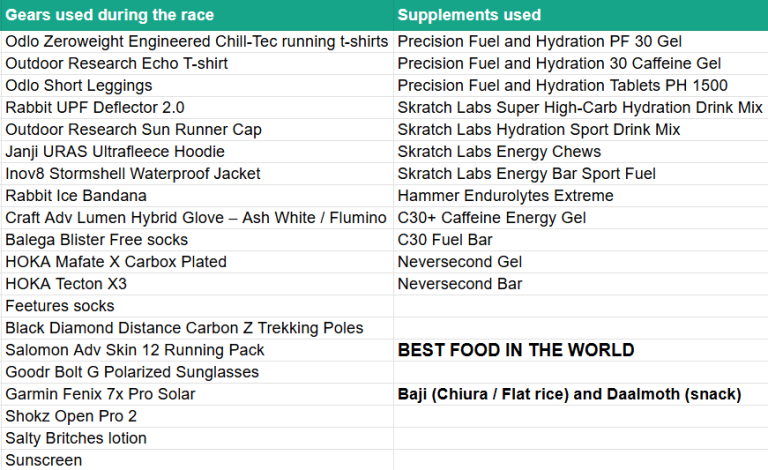
What’s Next: Moab 240
Bigfoot taught me something my uncle already knew: you don’t get to pick the fight Mother Nature hands you. I went in looking for peace and came out having survived. That’s the deal. That’s always been the deal.
Three down, one to go. AZ Monster gave me heat — and at mile 20, it gave me sickness that could have ended my race before it really started. I fought through that and kept going. Tahoe gave me altitude. Bigfoot gave me a mountain and a version of myself I had to fight to get back. Somewhere out there on those ridgelines, 715 miles into this year, I stopped chasing peace altogether and just chased the next foothold, the next aid station, the next reason to keep going. That turned out to be its own kind of peace.
2026 Ultra Endurance Grand Slam: One more to go. 3 out of 4 races completed
Now there’s Moab 240 — October 9th through 13th, 240 miles (we have ran this previously on October 2022) through red rock desert and canyon country, the final chapter of the 2026 Grand Slam. Different terrain, different demons waiting somewhere out on that trail. But I know something now that I didn’t know standing at the start line in the Cascades: I’ve already met the version of myself that wants to quit, and I’ve already beaten him twice. He’ll show up again in Utah. I’ll be ready.
None of this has ever been mine alone. Every mile of this Grand Slam has been carried by the love and support of family and friends spread across the world — here in the US, back home in Nepal, and everywhere in between. Every text message, every prayer, every person checking in from a time zone away — it all reaches me out there, even when the trail doesn’t. I can feel it with every step.
One more race. One more negotiation with Mother Nature. And I won’t be walking into it alone — I’ll be carrying all of you with me. Let’s finish this.